Why Hitting Skip Was the Worst Thing That Ever Happened to Your Music Library
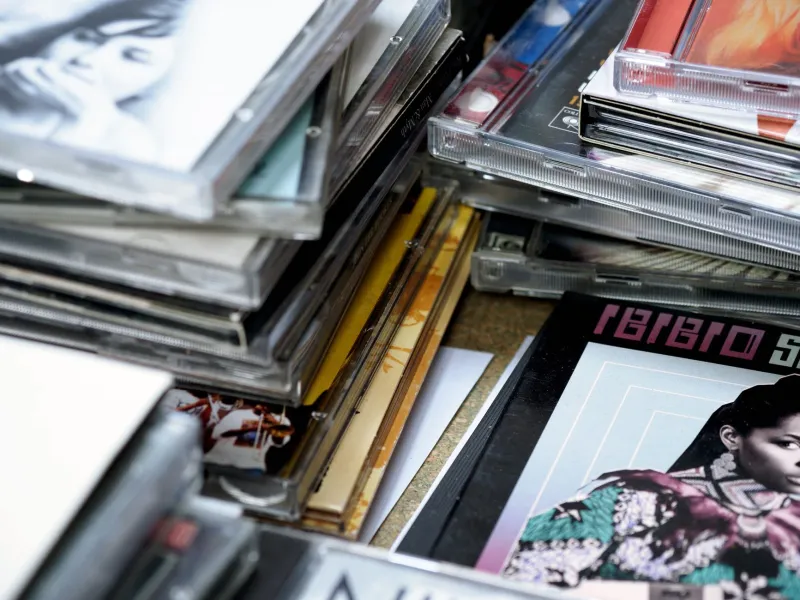
There's a particular kind of memory that almost every '90s music fan carries around without realizing it. It's not just the song — it's the journey to the song. The whirring click of a cassette deck rewinding. The soft mechanical thunk of a CD tray sliding open. The patient, slightly anxious wait as a track you didn't ask for played out before the one you actually wanted arrived. You didn't choose that experience. It was handed to you. And somehow, it hit harder than anything an algorithm has managed to serve up since.
We've been thinking about this a lot at Notes92 lately. Specifically, why so many people describe '90s albums with a kind of full-body reverence that they rarely extend to music they discovered on Spotify last Tuesday. The songs were great, sure. But was that really all of it?
The Tyranny of the Track List (That We Actually Miss)
Here's the thing about cassettes: they were bossy. Side A ended when Side A ended. You couldn't rearrange the running order. You couldn't skip the slow interlude track just because it made you feel something uncomfortable. You were, in the most literal sense, along for the ride.
Vinyl worked the same way. Early CD players — especially the boombox variety that populated suburban American bedrooms circa 1993 — weren't exactly nimble. Sure, the skip button technically existed. But there was a social contract with physical media that most people honored without even thinking about it. You played the album. The whole album. That was just how it worked.
Music psychologists have a name for what that enforced linearity was doing to listeners: it was building what researchers sometimes call "earned familiarity." The idea is straightforward. When you have to work slightly harder to reach a reward — or when the reward arrives inside a larger context you can't easily escape — your brain assigns it more emotional weight. The song you waited through three tracks to hear didn't just sound good. It felt deserved.
Dr. Margaux Tilden, who studies auditory memory and emotional recall, put it plainly in a conversation we referenced while pulling this piece together: "Friction isn't the enemy of enjoyment. In a lot of cases, it's actually what creates depth. When every song is equally accessible, none of them feel particularly special."
The Hidden Architecture of a Great Album
Bands in the '90s knew their listeners were going to hear the whole record. That knowledge shaped how albums were built. Sequencing wasn't just an afterthought — it was a craft. Producers and artists thought carefully about energy arcs, about where to place the emotional gut-punch, about how a quiet track in the middle could make the one that followed hit twice as hard.
Think about how Jagged Little Pill moves. Or The Chronic. Or Nevermind. Those albums weren't collections of singles dressed up in a sleeve. They were designed experiences with internal logic, emotional pacing, and deliberate tension. The deep cut you initially tried to fast-forward through on your first listen became, by the fifth or sixth run-through, the track you'd quote to prove you really knew the record.
That's not nostalgia talking. That's architecture. And streaming, for all its miraculous convenience, largely demolished it. When listeners can pull any track out of sequence at any time — and when platforms actively encourage cherry-picking via curated playlists — the album as a cohesive emotional journey becomes almost irrelevant. You're not experiencing a room. You're grabbing items off a shelf.
What Patience Actually Bought You
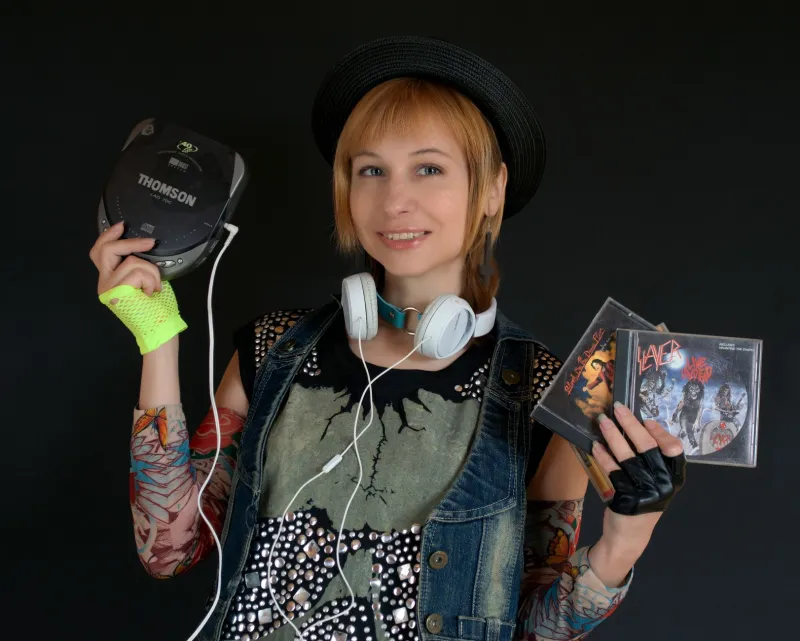
Long-time fans who grew up with physical media describe something that sounds almost meditative when they talk about their listening habits back then. Sarah Kowalczyk, a 38-year-old music teacher from outside Cleveland, remembers lying on her bedroom floor with a Discman and Tragic Kingdom on repeat for entire Saturday afternoons. "I didn't have a choice but to listen to the whole thing," she says. "And because of that, I know every breath on that album. I know the spaces between the notes. You can't get that from shuffling."
There's real science behind what Sarah's describing. Repeated exposure to a fixed sequence of music — especially during adolescence, when the brain's emotional centers are particularly active — creates layered memory encoding. The song gets tied not just to a feeling, but to the songs that surrounded it, the physical act of listening, the specific texture of that afternoon. It becomes three-dimensional in memory in a way that a track played once on a commute playlist simply cannot.
The People Deliberately Putting the Friction Back
Here's where it gets interesting: a growing number of listeners in 2024 are actively engineering the limitations back into their music lives. Cassette sales have been quietly climbing for years — physical format revenue for tape hit numbers nobody in the industry predicted even a decade ago. Vinyl, obviously, never really left. But beyond format, people are adopting deliberate rules: no skipping, full albums only, phone face-down, no multitasking.
Reddit communities dedicated to "intentional listening" have exploded in membership. Audiophile forums that used to be niche corners of the internet now draw mainstream music fans who are exhausted by the frictionless abundance of streaming and want to feel something again. Some people are buying CD players specifically because the slight inconvenience of the format forces them to commit.
It's not Luddism. It's not even really nostalgia, at least not in the shallow commercial sense. It's a recognition that the way you consume something shapes how much it means to you. That's a truth the '90s didn't invent — but it's one that era demonstrated more clearly than almost any other period in music history.
You Can't Rush the Good Part
There's a reason people still talk about '90s albums the way they talk about formative relationships. Those records got in. They had time and repetition and a captive audience on their side. The emotional residue they left behind isn't just about the quality of the music — it's about the conditions under which that music was absorbed.
Streaming gave us everything. And in doing so, it quietly took away the thing that made everything matter: the wait, the context, the architecture of an album playing out the way it was meant to.
So next time you're tempted to hit skip, maybe don't. Let the track play. Sit with the part that doesn't immediately grab you. There's a decent chance that, six listens from now, it's the part you remember most.
The '90s knew something about that. We're still catching up.