Your Shuffle Was Lying to You — and You Loved Every Second of It
There's a conversation that happens at least once at every '90s throwback gathering, usually right after someone puts on a playlist and a particular song comes on for the second time in an hour. Someone groans. Someone else laughs. And then somebody — always somebody — says it: "This thing is not actually random, you know."
They're more right than they realize.
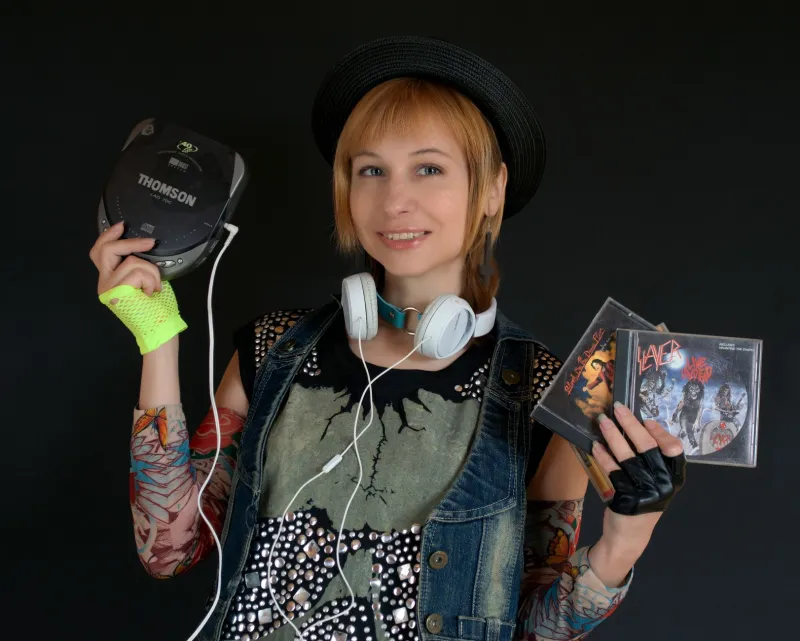
Shuffle mode was one of the defining features of portable music in the late '90s and early 2000s. It was right there on the face of your Discman, your Rio MP3 player, and eventually your first-generation iPod. One button, infinite possibilities, total freedom from the tyranny of track order. Or so the pitch went. The reality, as millions of listeners quietly suspected while their devices kept serving up the same handful of songs, was considerably messier.
The Button That Promised Everything
To understand why shuffle felt broken, you have to understand what it was actually supposed to do. True randomness — the mathematical kind — doesn't care about your feelings. It doesn't spread songs out evenly or make sure you haven't heard something in a while. It just picks. And because it picks without memory, it absolutely can, and statistically will, repeat songs or cluster similar ones together in ways that feel anything but accidental.
Early portable CD players with shuffle functions were working with limited processing power and even more limited memory. Some models used pseudo-random number generators that weren't particularly sophisticated, which meant their "random" sequences had patterns baked right in. Certain positions in a playlist were statistically more likely to get hit early. Others languished. If you had a 12-track album on shuffle, tracks 1, 4, and 9 might have shown up constantly while track 11 felt like it was in witness protection.
And that's before we even get into the hardware quirks. Some Discman models had a documented tendency to weight earlier tracks in a disc's table of contents more heavily during shuffle — a boring technical artifact that felt, to the teenager hearing "Waterfalls" for the third time on a bus ride, like a cosmic conspiracy.
Your Brain Was Also in on It
Here's where it gets really interesting, though: even when the shuffle was working perfectly fine, your brain was actively sabotaging your ability to perceive it that way.
Confirmation bias is the psychological tendency to notice and remember things that confirm what you already believe — and to forget the stuff that doesn't. If you were already suspicious that your CD player favored certain songs, you'd clock every repeat like a hawk and completely space on the fifteen other songs it played without issue. The hits registered. The smooth, varied playback didn't.
There's also something called the clustering illusion, which is our tendency to see patterns in genuinely random data because our brains are wired to find meaning everywhere. Flip a coin twenty times and you'll almost certainly get a run of four or five heads in a row at some point. It's just probability doing its thing. But it doesn't feel random — it feels rigged. The same thing happened with shuffle. A run of upbeat tracks felt curated. Two sad songs back-to-back felt like the device was reading your diary.
This isn't a knock on '90s listeners. It's just how human perception works. We are genuinely terrible at recognizing true randomness when we see it.
The iPod Made It Worse (Then Fixed It)
When the first iPod dropped in 2001, shuffle took on a whole new dimension. Now you weren't dealing with 12 tracks on a single album — you were dealing with hundreds of songs from dozens of artists, all theoretically in play at once. The stakes for shuffle fairness went way up.
And the complaints followed almost immediately. People swore their iPods had moods. That certain artists kept coming up. That the device somehow knew when they needed to hear a specific song. Apple got so much feedback about this that they eventually tweaked the iPod's shuffle algorithm specifically to make it feel less mathematically random — spacing out artists and albums so the same name didn't pop up twice in quick succession — because true randomness felt too weird to actual humans.
Steve Jobs reportedly described the change by saying they made shuffle "more random" to make it feel less random. Which is a sentence that sounds like a riddle but is actually just a very honest description of how human psychology collides with probability.
The Curse Became the Culture
What's genuinely fascinating, looking back, is that none of this killed shuffle's appeal. If anything, the perceived quirks made it more compelling.
There was a whole social ritual around the shuffle experience in the '90s and early 2000s. You'd hand someone your CD player on a road trip and they'd report back on what came up, and it became a kind of reading — like tarot cards made of Matchbox Twenty and Outkast. People assigned meaning to what their shuffle served up. "It keeps playing this song, which is obviously a sign." "Every time I put it on shuffle at the gym, Eminem comes on first. It knows."
The shuffle wasn't just a feature. It became a personality. Your device had taste. Your device had opinions. Your device, apparently, had feelings about your love life.
That sense of mystery — of not quite knowing what was coming next but suspecting the machine had a plan — made the listening experience feel alive in a way that a static playlist never could. There was genuine anticipation built into every press of that button.
We Miss the Glitch
Streaming fixed most of this, technically speaking. Modern shuffle algorithms are vastly more sophisticated, and services like Spotify have poured serious engineering resources into making sure playback feels genuinely varied. You can even look under the hood now, sort of — see your listening history, your stats, your most-played tracks laid out in plain data.
And it's fine. It works great. It's just a little less magical.
There was something about not knowing — about genuinely suspecting your Discman was haunted or your MP3 player had developed preferences — that made the music feel more personal. Like it was chosen for you, specifically, by something that understood you better than you understood yourself.
It wasn't real. The algorithm was just clunky and your brain was filling in the gaps. But the feeling was completely real, and that's the part that stuck.
So the next time your playlist serves up the same song twice in a row and you roll your eyes at the screen, just know: you've been doing this since 1998. The shuffle was never really random. And honestly? That was kind of the whole point.