Tinny and Perfect: Why 128kbps MP3s Hit Harder Than Any Studio Master Ever Could
Let's be honest. The first time you heard your favorite song as a 128kbps MP3 ripped from Napster, it didn't sound great. The high end was clipped. The bass felt hollow. If you listened closely enough, there was this weird underwater warble whenever the chorus kicked in — what audio nerds call "compression artifacts." You didn't care. You hit play again anyway.
For a very specific slice of American youth — Gen X kids and older millennials who came of age somewhere between 1997 and 2003 — that degraded, slightly-broken sound became the defining texture of how music felt. Not just how it sounded. How it felt. And decades later, a lot of us still can't fully explain why a flawless high-resolution audio file on Spotify doesn't hit the same way a grainy MP3 downloaded over a 56k modem ever did.
The Modem Was the Overture
If you were there, you remember the ritual. You'd open Napster — or later, LimeWire, Kazaa, or AudioGalaxy — type in the song you wanted, and wait. Sometimes the download would take twenty minutes. Sometimes it would stall at 97% and you'd have to start over. The dial-up connection screamed and chattered every time someone picked up the phone. And then, finally, the file would finish.
That waiting wasn't just dead time. It was anticipation. It was investment. By the time the song actually played, you'd already spent a non-trivial chunk of your evening earning it. There's a psychological concept sometimes called "effort justification" — the idea that we value things more when we work harder to get them. Nobody was thinking about behavioral economics back then. But the dial-up modem was accidentally running that experiment on millions of teenagers every single night.
The song didn't have to sound perfect. You'd already decided it was worth it before the first note played.
What 128kbps Actually Did to Music
Here's the technical part, kept as painless as possible. MP3 compression works by throwing away audio information the human ear supposedly can't detect — high frequencies, subtle reverb tails, the spatial depth of a recording. At 128 kilobits per second, you're keeping roughly one-tenth of the data from the original CD. The result is a file small enough to download in a reasonable amount of time over a slow connection, but sonically thinner than what the artist actually recorded.
What that thinness did, unintentionally, was strip music down to its most essential elements. The complicated studio gloss got shaved off. What remained was the hook, the vocal, the beat — whatever was loud and central enough to survive compression. In a weird way, 128kbps was a brutal editor. Songs that were built around a genuinely great core melody survived just fine. Tracks that relied heavily on production texture or sonic layering sounded hollow and exposed.
This is part of why certain genres thrived in the MP3 era in ways that made total cultural sense. Punk, pop-punk, rap, and hard rock — music built on directness and impact — translated surprisingly well to compressed audio. Meanwhile, more atmospheric or nuanced recordings lost something real in the conversion. The medium had opinions, even if nobody asked for them.
The Bedroom Speaker as Sacred Space
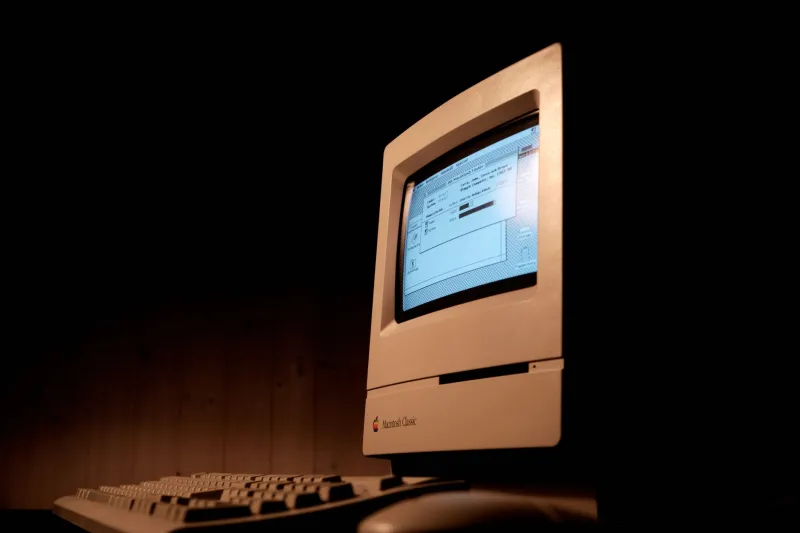
Think about where most of those MP3s actually got played. Not through a proper stereo system. Not through headphones with any real fidelity. Through the built-in speakers on a beige desktop computer, or a pair of those cheap plastic computer speakers that came in a two-piece set and cost about fifteen dollars at Best Buy. The kind with a tiny subwoofer that rattled the desk and a high end that could charitably be described as "present."
That listening environment mattered. A lot. The songs you heard in that context — late at night, in your room, probably doing homework or IMing someone you had a crush on — got permanently fused to that specific acoustic experience. Nostalgia is sneaky like that. It doesn't just attach to the music. It attaches to the whole sensory package: the sound, the room, the time of day, the emotional state you were in. When you hear that same song today through pristine audio, something in your brain is quietly noticing that it doesn't match the archived version. The clarity almost feels like a stranger wearing a familiar face.
Lo-Fi Culture Didn't Start on YouTube
There's a whole genre now — lo-fi hip-hop, lo-fi study beats, lo-fi everything — built around deliberately degraded audio aesthetics. Vinyl crackle, tape hiss, slightly muffled frequencies. It's enormously popular, and most of the discourse around it credits Japanese producers and the chill-hop movement of the 2010s.
But here's a different read: that aesthetic already existed, baked into the lived experience of everyone who grew up with dial-up internet. The lo-fi movement didn't invent the emotional resonance of imperfect audio. It just gave a name to something a generation of Americans had already been feeling for years. The warmth people find in lo-fi music isn't really about vinyl or tape. It's about the memory of hearing something imperfect and loving it anyway — of the music being enough despite the noise.
The 128kbps generation learned, maybe without realizing it, that emotional connection to music doesn't require technical perfection. It requires presence. It requires that the song meets you where you are, even if where you are is a dial-up connection at 11pm with a math test in the morning.
Why the Artifact Became the Aesthetic
Audio compression artifacts — those warbling, swirling distortions that appear in heavily compressed files — have a specific name in audio engineering: they're called "pre-echo" and "smearing." They're considered defects. But ask anyone who spent serious time with late-'90s MP3s and they'll tell you those sounds feel familiar in a way that's almost comforting. Not because they're good. Because they're ours.
Every generation has its sonic fingerprints. For people who grew up in the '60s, it might be the warmth of AM radio. For '70s and '80s kids, maybe the slight hiss of a cassette tape. For the dial-up generation, it's that compressed, slightly-thin digital sound — music that had been squeezed down to fit through a phone line and came out the other side still somehow carrying everything that mattered.
You can stream anything now in lossless audio. You can hear exactly what the engineer heard in the studio, every detail preserved. It's genuinely impressive technology. But there's still a corner of your brain — if you're old enough to remember the Napster days — that hears a crystal-clear recording and thinks, quietly, something's missing.
What's missing is the artifact. The imperfection. The proof that you waited for it.
And honestly? That's kind of beautiful.