Loud, Broken, and Completely Understood: Why '90s Grunge and Hip-Hop Spoke Teenage Fluently

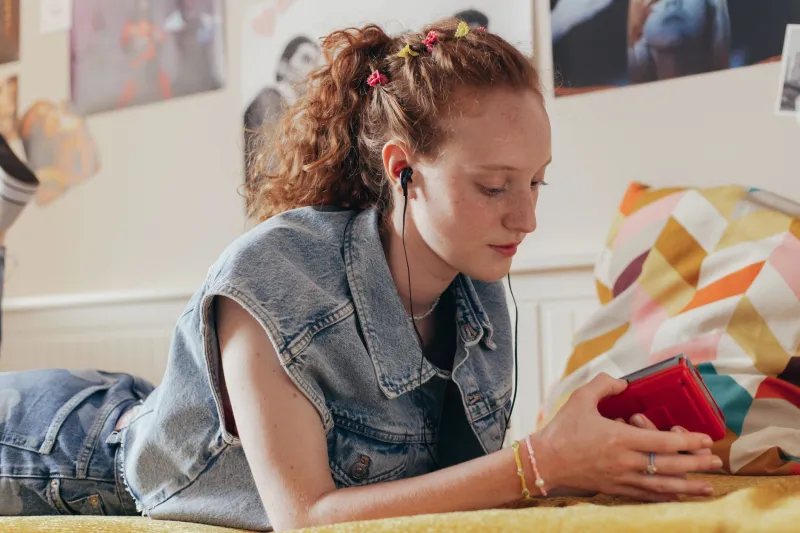
There's a specific memory a lot of people carry from the '90s. You're fifteen, maybe sixteen. Something went wrong — a breakup, a fight with your parents, the general shapeless misery of being a teenager in America — and you put on headphones. Not to drown out the world, exactly. More like to find someone who already lived inside it.
For millions of kids growing up in that decade, that someone was Kurt Cobain screaming himself hoarse, or Thom Yorke quietly unraveling over a guitar line that felt like it was dissolving in real time. It was Raekwon and Ghostface building labyrinthine street narratives that made you feel the weight of a world you'd never personally touched. The music wasn't aspirational. It wasn't trying to make you feel better. It was just honest in a way that felt almost reckless.
Nothing in today's streaming landscape quite gets there. That's not nostalgia talking — or not entirely. There's actually a structural reason why.
The Texture of Teenage Misery, Accurately Rendered
Grunge and '90s hip-hop shared something that sounds simple but was actually pretty rare: they didn't clean up the mess. Nirvana's In Utero sounds like it was recorded inside a building that was being torn down. Wu-Tang's Enter the 36 Chambers has this deliberately lo-fi, almost confrontational quality — like the production itself was daring you to keep listening. Radiohead's The Bends sat in this uncomfortable middle space between alt-rock polish and something genuinely falling apart.
For teenagers, that sonic roughness wasn't a flaw. It was the whole point. Adolescence doesn't sound clean. It sounds exactly like that — distorted, half-finished, a little too loud in the wrong places. When Kurt Cobain's voice cracked on Lithium, it wasn't a technical imperfection. It was an emotional data point. It meant something.
Compare that to the way most teen-targeted music gets produced now. Everything is compressed within an inch of its life, optimized for earbuds and algorithmic playlists, engineered to hit a dopamine peak in the first seven seconds before a listener swipes away. The production is often genuinely impressive. But impressive and felt are two different things.
Lyricism That Didn't Explain Itself
One of the quiet gifts those artists gave their listeners was a refusal to over-explain. Something in the way she moves / Doesn't let me hold her down — Cobain never tells you what that means. He doesn't have to. The ambiguity is the point. Teenagers, who spend a lot of time living inside feelings they can't articulate, recognized that instinctively.
Hip-hop of that era operated on a similar principle, just through a completely different lens. The Wu-Tang Clan weren't writing therapy-session confessionals. They were building entire fictional universes dense with metaphor, slang, and coded reference. But the emotional undertow — the sense of being trapped in circumstances designed to grind you down, of needing to forge an identity out of whatever was available — translated across every demographic. Kids in suburban Ohio heard C.R.E.A.M. and understood it as a story about powerlessness even if they'd never been anywhere near Staten Island.
Nas's Illmatic, Biggie's Ready to Die, even Tupac's more reflective moments — this was music that demanded you meet it halfway. It assumed you were smart enough to do that. That assumption mattered enormously to the teenagers receiving it.
Cultural Context: The Last Moment Before the Filter
It also helps to remember what the cultural landscape looked like. The early-to-mid '90s were this unusual window where the music industry was still run by people who had no reliable way to predict what would be a hit. Nirvana's success genuinely blindsided everyone, including their label. That chaos created space for weird, difficult, uncommercial music to slip through and find a massive audience.
There was no algorithm sorting listeners into demographic buckets. There was no data team optimizing the bridge of a song for maximum skip prevention. A teenager in 1993 discovered music through word of mouth, through older siblings, through MTV at 2 a.m. when 120 Minutes was on and nobody was watching. The discovery itself felt transgressive. You weren't being served content. You were finding something.
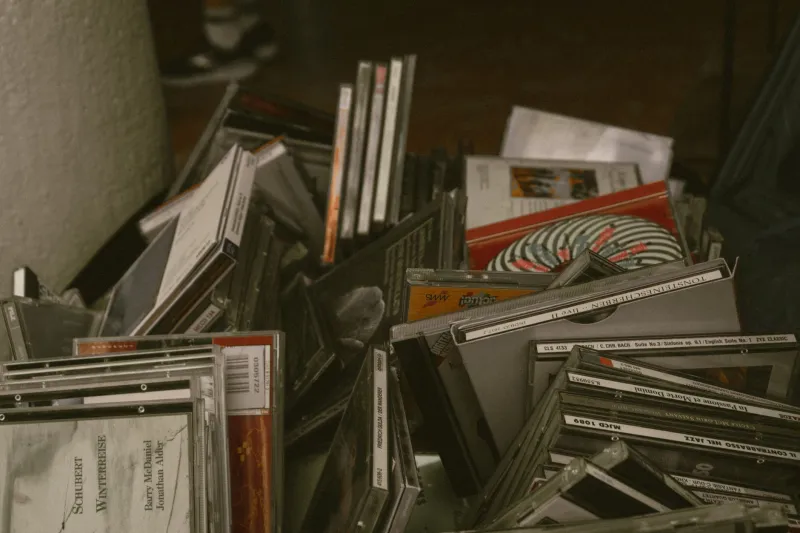
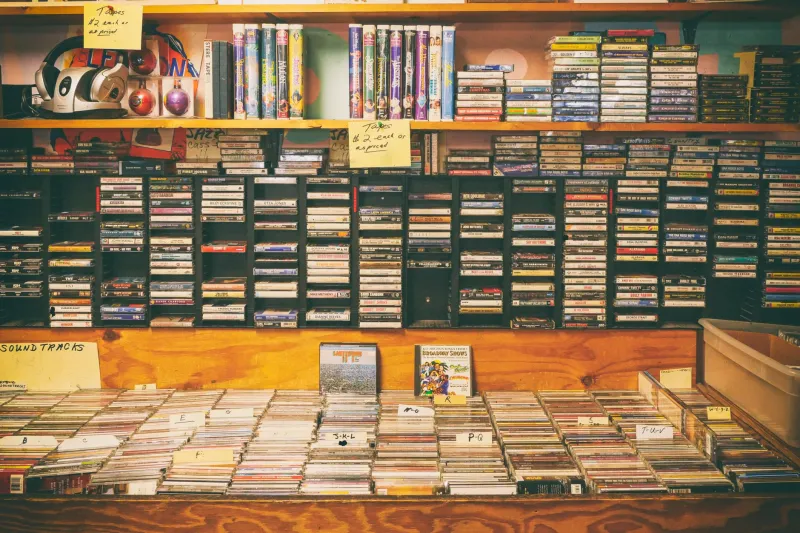
That context shaped the relationship between the music and the listener. When you hunted down a record, when you dubbed it onto a tape and listened to it until it wore thin, you had a stake in it. The music meant something partly because of what it cost you — time, effort, a little money, a lot of emotional investment.
What Today's Teen Anthems Are Actually Doing
This isn't a screed against modern music. There are artists right now making genuinely vulnerable, emotionally complex work. Olivia Rodrigo's debut album got closer to that raw-nerve quality than almost anything in the mainstream had in years. Billie Eilish, at her best, operates in a register of quiet dread that has real ancestry in Radiohead's quieter moments.
But the ecosystem those artists exist in is fundamentally different. A song that's too slow, too abrasive, or too demanding gets skipped. The market pressure toward accessibility is enormous and largely invisible — it operates through data, not through any single person's decision. The result is music that's often beautiful and occasionally profound but rarely uncomfortable in the way that '90s grunge and hip-hop were routinely uncomfortable.
Uncomfortable was the feature. The discomfort was the communication.
Why It Still Hits Different
Put on Smells Like Teen Spirit today and something strange happens. It still sounds urgent. It still sounds like it's about to fall apart. That quality didn't age out of it. Spin Illmatic and the density of it, the way every bar is doing three things at once, still commands your full attention in a way that most modern releases don't.
That's not just nostalgia for a specific decade. It's recognition of something that was genuinely accomplished — music that met teenagers exactly where they were, in the specific geography of their confusion and anger and sadness, and said: yeah, this is real, you're not imagining it, here's what it sounds like from the inside.
For a generation that grew up feeling largely invisible to mainstream culture, that was everything. And the reason nothing quite hits the same now isn't that artists aren't talented. It's that the conditions that allowed that music to exist — the chaos, the discomfort, the refusal to optimize — have been systematically removed from the equation.
The '90s didn't produce better musicians. They just produced a moment when the music industry accidentally let the teenagers run the asylum. And the teenagers, it turned out, had a lot to say.