Cracked Cases and Liner Notes: The Quiet Magic of '90s CD Packaging That Streaming Killed
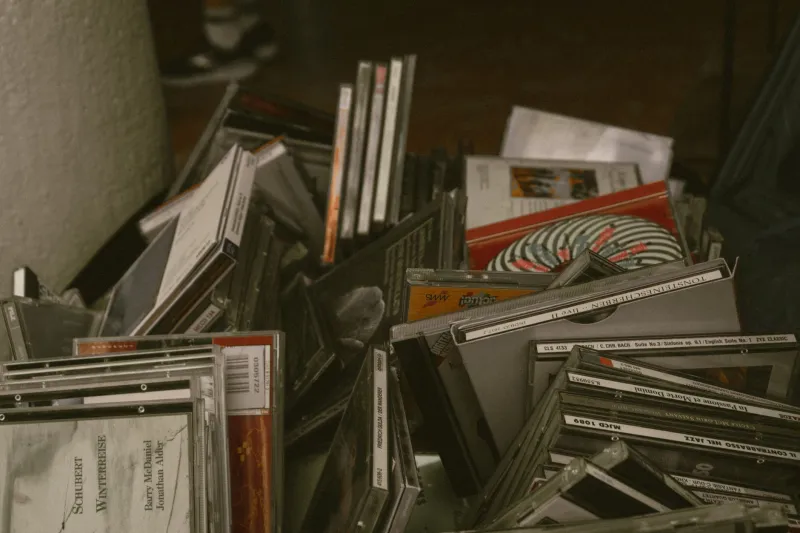
There is a very particular kind of paper cut that only people who grew up in the '90s truly understand. You know the one. You're trying to pry open a new CD case, your thumbnail finds the sticker seal running along the top edge, and somewhere in the process, the sharp corner of the jewel case finds your finger. You bled a little for that album. And somehow, that made it mean more.
This is not a piece about suffering for art. But it is a piece about the fact that owning music used to require something from you — time, money, physical effort, attention — and how that investment fundamentally changed your relationship with what you were listening to. The '90s CD experience wasn't just a delivery mechanism for audio. It was an entire sensory event, and we gave it up faster than anyone probably should have.
The Object Itself Was Part of the Message
Open Spotify right now. Find your favorite album. What do you see? A square thumbnail, maybe 300 pixels wide, sitting next to a tracklist in a clean sans-serif font. It's functional. It's fine. It tells you almost nothing.
Now think about holding a physical copy of Nirvana's In Utero. The unsettling angel on the front. The grotesque collage imagery on the back. The lyrics printed in Kurt Cobain's actual handwriting, accompanied by his own bizarre artwork. The whole package communicated something deeply specific about the band's psychology, their aesthetic world, their refusal to be comfortable or commercial. You understood something about In Utero before you heard a single note, just from holding it.
That wasn't accidental. Artists and their labels understood that the physical object was an extension of the music — a first impression, a statement of intent. Radiohead's OK Computer had this cold, bureaucratic visual language that perfectly mirrored the album's themes about technology and alienation. Fiona Apple's Tidal booklet was intimate and raw in a way that felt genuinely confessional. Outkast's ATLiens packaging leaned into its alien mythology with imagery that expanded the album's concept beyond what the music alone could do.
The art wasn't decoration. It was argument.
Reading the Room (Literally)
Here's something streaming has completely eliminated: the liner notes rabbit hole. You bought an album, you got home, you put the disc in the player, and while it loaded you cracked open that little booklet and started reading. And you didn't stop until the album was over.
Liner notes were where you found out who played what, who produced which track, which songs were recorded live versus in the studio, and — crucially — who the artist wanted to thank. That thank-you section was basically a social map of the music industry in miniature. You'd see the same names appearing across multiple albums and start to understand how scenes connected, how collaborations worked, who influenced who.
For hip-hop fans especially, liner notes were essential. Sample credits told you where the music came from, which sent you digging through your parents' record collections or flipping through bins at used record stores trying to track down the original. The liner notes of a great hip-hop album were essentially a curriculum.
And then there were the lyrics. Having the actual printed lyrics to a song changed how you heard it. You'd follow along, catch words you'd misheard for months, notice rhyme schemes you'd missed, understand references that had gone over your head. It deepened the experience in a way that Genius annotations — useful as they are — never quite replicate, because Genius is a separate app you have to navigate to, and the booklet was just there, in your hands, part of the same object as the music.
The Shelf as Identity
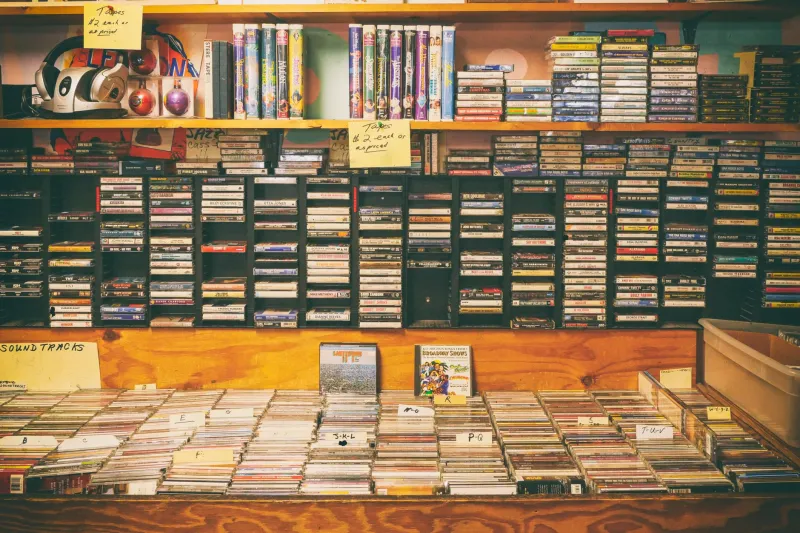
A CD collection was a self-portrait. Anyone who came into your room in the '90s could spend five minutes scanning your shelves and walk away with a pretty detailed read on who you were, what you cared about, where you'd been emotionally. Your musical taste was physically present in a way it simply isn't anymore.
This created a whole social ritual around collections. You'd go to a friend's house and immediately check out their CDs. You'd borrow and lend. You'd judge each other — gently, affectionately, sometimes not so gently — based on what was there. The CD collection was a conversation starter, a compatibility test, a window into someone's interior life.
There was also the pride of acquisition. When you finally tracked down an import copy of something obscure, or found a first pressing with different artwork, or scored a used copy of an out-of-print album at a record store in a city you were visiting — that felt like an achievement. You earned those CDs in a way that adding something to a streaming playlist simply doesn't require.
The Tactile Ritual Nobody Talks About Enough
Let's slow down and really account for everything involved in listening to a CD in 1997. You walked to the store or the mall. You browsed. You made a decision, handed over actual cash, and carried the thing home. You broke the seal. You slid the disc out of the case, careful not to touch the underside. You placed it in the player. You sat down with the booklet. You pressed play.
That sequence of actions — the physical ritual of it — primed your brain to pay attention. You had invested in this experience. You were present for it. Compare that to the modern experience of tapping a thumbnail while doing three other things simultaneously, and it's not hard to understand why so many people feel like music doesn't hit the same way it used to. It's not that the music is worse. It's that we stopped giving it our full attention, and the format used to require it.
What We Could Learn From a Jewel Case
Nobody's seriously suggesting we go back to an era of limited releases and physical-only distribution. Streaming democratized music access in genuinely important ways. Artists who never would have found an audience through traditional retail channels now reach listeners worldwide. That matters.
But the '90s CD era understood something about the relationship between music and its audience that the current model has largely discarded: the idea that an album is a complete artistic object, not just a playlist of tracks. The packaging, the artwork, the liner notes, the physical weight of the thing — all of it contributed to a listening experience that was richer and more intentional than what most of us have now.
Maybe that's why vinyl has made such a sustained comeback. People aren't just buying records for the audio quality. They're buying the ritual. They're buying the object. They're buying the relationship with music that comes from holding something in your hands and committing to it.
The '90s knew that. Every cracked jewel case is proof.