Hidden in Plain Sight: The Secret Messages '90s Artists Buried Inside Your CD Booklets
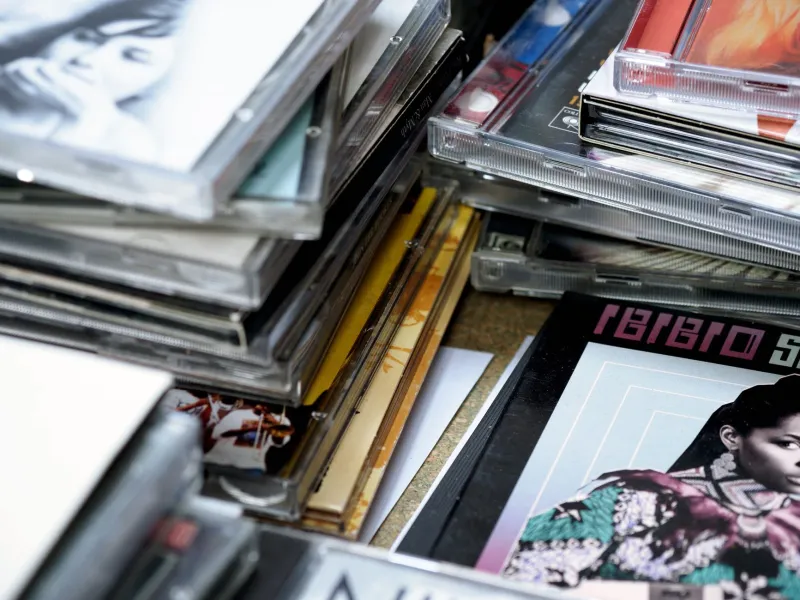
There was a ritual to buying a new CD in the '90s. You paid, you walked to the car, you cracked the case before you even started the engine. The disc went in the stereo, but your eyes went straight to the booklet. Not just for the lyrics — for everything else. The weird font choices. The blurry photo credits. The inside jokes printed in 6-point type that you had to hold up to a window just to read.
That wasn't an accident. A lot of '90s artists were deliberately hiding things in there. Messages meant for the obsessives. Clues meant for the patient. Jokes meant for nobody except the band and maybe three people in their hometown. And the wild part? Most of it still hasn't been fully decoded, because the internet didn't come along and ruin the mystery in real time. You had to find it yourself, or you missed it entirely.
The Era That Made You Work for It
Streaming didn't just kill the album format — it killed the archaeology of fandom. When you own a physical object, you study it. You flip it over. You read the fine print. You notice that the thank-you section lists someone's name in a different font than everyone else's, and you spend two weeks trying to figure out why.
That kind of engagement was baked into the CD experience by design. Artists and their art directors knew fans were going to pore over every inch of that booklet, so some of them started treating it like a second album — one you could only hear if you knew how to look.
Tori Amos was notorious for this. Her mid-'90s releases were practically annotated texts, full of symbolic imagery, cryptic dedications, and lyric fragments that didn't match the final recorded versions. Fans compared booklets across pressings, trying to figure out what changed and why. It wasn't just listening — it was scholarship.
Secret Tracks Started on the Page
Everyone remembers the hidden track phenomenon. You'd let the disc run past the final listed song, sit through five minutes of silence, and suddenly — surprise. But what a lot of people forget is that some artists left clues about those hidden tracks in the liner notes, buried so deep that only the most dedicated fans would ever find them.
A few bands listed track times that didn't add up. Others included track counts that were off by one. Some printed tiny asterisks next to a song title with no explanation. If you caught it, you knew to keep the disc running. If you didn't, you thought the album just ended.
Nine Inch Nails turned this into an art form across the decade. Trent Reznor treated physical packaging as part of the work itself — not promotional material, but actual creative territory. Credits were written in character. Imagery was chosen to contradict the lyrics. The booklet wasn't explaining the music; it was arguing with it.
The Thank-You Section as Coded Autobiography
Here's the thing about '90s thank-you lists that nobody talks about enough: they were deeply personal documents printed on mass-market objects. Artists would drop in the names of people they were fighting with, people they were sleeping with, people they'd lost — all mixed in with the label executives and studio engineers.
For fans paying close attention, those lists were biographical. You'd notice a name disappear between albums and know something had gone wrong. You'd see a new name appear and wonder who it was. You'd clock the difference between someone listed as "my brother" on one record and just their first name on the next.
The Smashing Corgan-era Pumpkins releases were practically soap operas rendered in small caps. The credits on Mellon Collie and the Infinite Sadness alone could fuel a graduate thesis on interpersonal dynamics. Billy Corgan wasn't hiding things exactly — but he also wasn't making them easy. If you cared enough to cross-reference, you could piece together a whole narrative that the music itself only hinted at.
Producer Shout-Outs and the Insider Economy
For a certain kind of fan, the production credits were the whole game. Recognizing a mixer's name meant you could trace sonic threads across completely different artists. Seeing the same mastering engineer on three albums you loved wasn't a coincidence — it was a clue about why they all felt the same even when they sounded different.
This was a genuinely underground education in how records got made. Before music production YouTube channels and podcast deep dives, the liner notes were your only map. Kids who read them obsessively came out the other side with a working knowledge of the industry that no class was teaching.
And some producers leaned into it. They'd leave little signatures — a specific credit phrasing, a recurring inside joke in the "special thanks" section — that their regulars would recognize. It was a community built entirely inside the packaging of commercial products.
The Misprint as Mythology
Not every hidden thing was intentional, and that almost made it better. Misprinted lyrics became legendary. A word swapped in the booklet that didn't match what the singer actually sang could launch years of debate. Was it a mistake? Was it the original lyric? Was it a deliberate change made after the booklet was already at the printer?
Without the internet to settle it in twenty seconds, those questions lived. They were things you argued about at lunch. Things you called your friend across town to debate. The uncertainty was part of the experience, and it made you more attached to the record — not less.
Alanis Morissette's Jagged Little Pill booklet is still discussed in these terms. Certain lyric transcriptions in that insert don't match the recording, and depending on who you ask, that's either a typo, a revision, or a message. Twenty-something years later, nobody's fully agreed.
What We Lost When It All Went Digital
The streaming era gave us convenience and took away the conspiracy. There's no hidden layer to a Spotify page. The credits are there if you dig into a third-party app, but nobody's printing them in a weird font at the bottom of a gatefold. Nobody's tucking a note to their ex inside the packaging of a digital release.
What's left is the archaeology of what already exists. People are still cracking open '90s CD booklets and finding things that never made it online — because nobody thought to type them up, or the scan quality was too low, or the detail was so small it never registered. There's still genuine discovery happening in those old cases.
That's the thing about physical media that no one quite anticipated when it started disappearing: it doesn't just hold music. It holds intention. It holds the evidence of someone deciding what mattered enough to put in print, knowing a stranger might spend years trying to figure out why.
Some of those strangers are still at it. And honestly? Good for them.