Your Brain Never Forgot a Single Word: The Science Behind Why '90s Lyrics Are Hardwired Into Gen X
Ask any Gen Xer to recite the chorus of a Smashing Pumpkins or TLC song and watch their eyes go distant for half a second before every word comes flooding back. It's not a party trick — it's neuroscience. The way '90s music was written, produced, and consumed created a near-perfect memory imprint that modern streaming just can't replicate.
You probably haven't thought about the second verse of "Waterfalls" in three years. But if someone starts humming it right now, you're going to finish the whole thing. Word for word. That's not nostalgia. That's your brain doing something genuinely remarkable — and the '90s gave it exactly the right raw material to work with.
The Brain on a Hook
Memory researchers have a term for the phenomenon where a song lodges itself permanently into long-term memory: an earworm that graduated. When music hits the right combination of emotional resonance, repetition, and novelty, it doesn't just pass through your auditory cortex and disappear. It gets encoded — the same way a traumatic event or a first kiss does.
The science behind this involves a region of the brain called the hippocampus, which handles memory consolidation, working in tandem with the limbic system, which processes emotion. When both fire together — which great music reliably triggers — the result is a memory that sticks with unusual tenacity. Neuroscientists sometimes describe it as "emotional tagging," where the feeling attached to a piece of information makes it far harder to forget than neutral data.
'90s music, almost by accident, was engineered to hit both systems simultaneously.
Why That Era Hit Different (Literally)
There's a reason the hooks from that decade feel like they were bolted into your skull. Songwriting in the '90s — across pop, alternative, grunge, R&B, and hip-hop — leaned heavily on what music psychologists call "melodic predictability with surprise." Think of it as the brain's reward loop: you expect one thing, the song delivers a slight variation, and your dopamine system lights up in response.
Pop-punk acts like Green Day and Blink-182 used relentless verse-chorus-verse structures with minimal variation, which meant your brain rehearsed the lyrics on a loop before the song even finished. Alternative acts like Alanis Morissette wrapped dense, conversational lyrics around melodies that felt almost spoken — which made them easier to internalize as personal narrative rather than just music. And hip-hop artists like Nas, Biggie, and Lauryn Hill were delivering lines with such rhythmic precision that the cadence itself became a memory anchor.
Production also played a role. The analog warmth of '90s recordings — before everything got digitally compressed and maximized — gave songs a textural quality that felt physically present. When you heard "Black Hole Sun" through a pair of cheap headphones or a boombox speaker, the imperfections in the sound created a sensory experience that was harder to tune out. Imperfect audio, it turns out, demands more active listening. And active listening burns things into memory faster.
Adolescence: The Ultimate Recording Session
Here's the other piece of the puzzle that no amount of algorithmic songwriting can manufacture: timing. Most Gen Xers were between 12 and 22 during the peak years of '90s music. That window isn't arbitrary.
Neuroscience has a name for it — the "reminiscence bump" — and it refers to the disproportionate number of vivid memories people retain from their teenage years and early twenties. The adolescent brain is essentially in overdrive: hormones are amplifying emotional responses, identity is being actively constructed, and the hippocampus is at peak encoding efficiency. Whatever music soundtracks that period doesn't just get remembered. It gets fused to the self.
This is why a 47-year-old who hasn't thought about Nirvana in a decade can still recite "Come as You Are" front to back without blinking. It's not that the song is objectively more memorable than anything released in 2018. It's that the song arrived during the exact developmental window when their brain was most primed to hold onto it forever.
The Repetition Economy Nobody Talked About
There's also a purely mechanical explanation worth acknowledging: people in the '90s heard the same songs constantly, in a way that modern listeners simply don't.
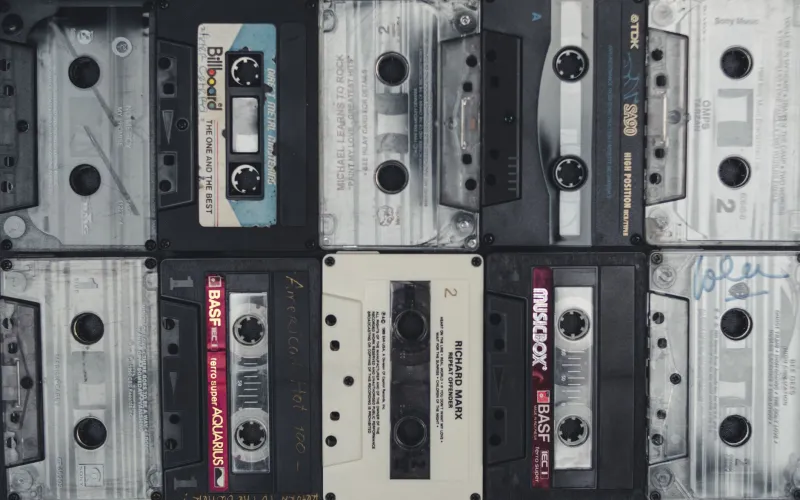
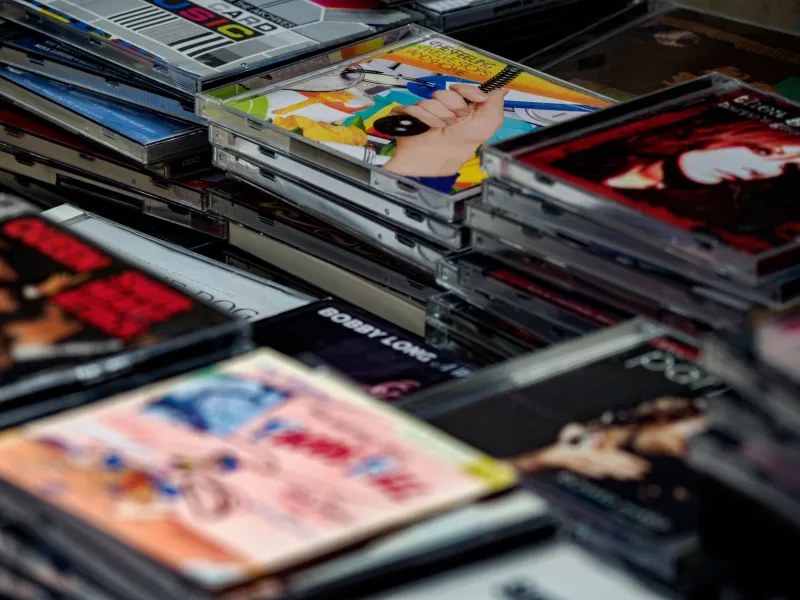
Before streaming fragmented music consumption into millions of individual queues, radio stations played the same forty songs on rotation for weeks. MTV ran the same videos between segments all day. You bought an album — an actual physical object that cost you real money — and you listened to it repeatedly because you couldn't just skip to the next thing without effort. Your brain didn't choose to memorize "Losing My Religion." It had no option but to memorize it, because it heard it four hundred times over the course of a year.
Repetition is, at its most basic level, how memory consolidation works. The more times a neural pathway gets activated, the more permanent it becomes. '90s music culture was essentially a massive, unintentional memory-consolidation exercise run on an entire generation.
What Modern Music Is Up Against
None of this is a knock on what's being made today. There are genuinely brilliant songwriters working right now, and plenty of young listeners who will remember 2024 releases with the same intensity Gen X feels about the '90s. But the conditions have changed dramatically.
Streaming gives listeners access to tens of millions of songs simultaneously, which means any individual track gets far fewer repeated plays than it would have in a world of physical albums and limited radio playlists. Attention is more fractured. The emotional stakes of music consumption — the investment required to actually own and listen to a record — are lower. And a generation hitting their reminiscence bump now is absorbing music in a fundamentally different sensory context than a teenager lying on their bedroom floor in 1994 with headphones and a cassette.
The '90s didn't just make good songs. They made songs under conditions that were almost uniquely suited to permanent memory encoding — the right songwriting structures, the right production textures, delivered at the right moment in a generation's cognitive development, repeated relentlessly by a media ecosystem with limited options.
The Lyrics Never Really Left
So the next time you're standing in a grocery store and a Counting Crows song comes on and you suddenly remember every word of a bridge you hadn't consciously thought about since Clinton was in office — that's not sentimentality. That's your hippocampus doing exactly what it was built to do, working with material that was almost perfectly designed to last.
The '90s didn't just give Gen X a soundtrack. They gave them a permanent internal library that no algorithm has managed to overwrite. Every word is still in there, filed under "adolescence" and cross-referenced with "never letting go."
Hit play. You already know what comes next.