Wired at Sixteen: The Real Reason '90s Songs Never Let Go of Your Brain
You're in the grocery store. Some mid-tempo song drifts out of the overhead speakers — maybe it's Matchbox Twenty, maybe it's Third Eye Blind — and before you've even consciously registered what you're hearing, your chest does something. Not pain exactly. Not joy. Something in between that doesn't have a clean name. You're holding a box of pasta in 2025 but some part of you is also in the backseat of someone's mom's Pontiac in 1997, and the two realities are briefly, uncomfortably overlapping.
That's not sentimentality. That's neuroscience.
Your Brain Was Under Construction
Here's the thing nobody really tells you when you're a teenager: your brain is in the middle of its most dramatic renovation project. Between roughly ages twelve and twenty-five, the prefrontal cortex — the part responsible for emotional regulation, decision-making, and memory consolidation — is still actively developing. Which means that everything hitting your senses during those years lands differently than it ever will again.
Neurologists call the resulting phenomenon the "reminiscence bump." Memories formed during adolescence and early adulthood are encoded more vividly and retrieved more easily than memories from almost any other life stage. Music, because it activates the brain's reward centers, emotional processing regions, and memory networks all at once, gets embedded especially deep. Songs you heard at sixteen didn't just pass through your ears. They got filed in a part of your brain that treats them as personally significant data — tagged to specific moments, specific feelings, specific versions of yourself that no longer technically exist.
The '90s didn't just happen to be a great decade for music. They happened to be the decade when millions of current adults were exactly the right neurological age to be permanently imprinted by whatever was playing.
Limited Options, Unlimited Replay
Streaming culture gives you access to essentially every song ever recorded. Which sounds like a dream until you realize what that abundance actually costs you.
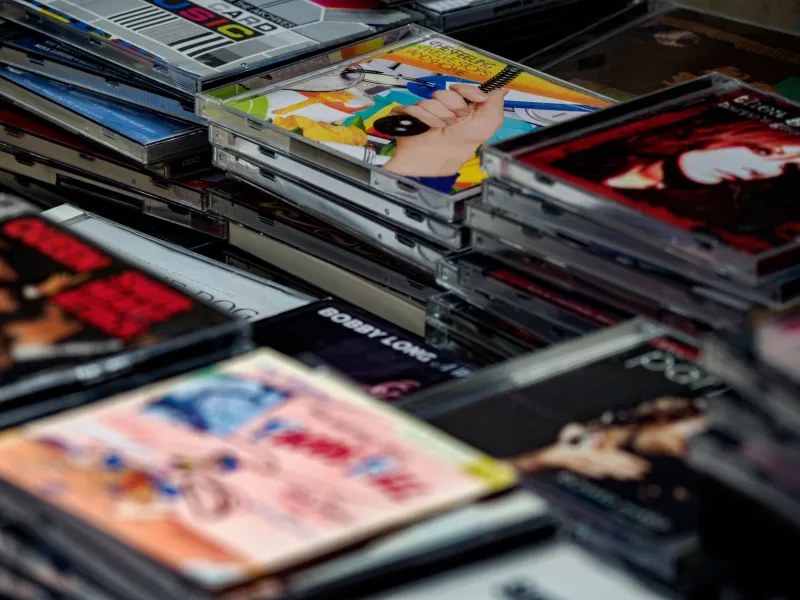
In the '90s, your musical universe was small and deliberately curated — not by an algorithm, but by circumstance. You had the radio stations your town carried, the CDs you could actually afford, the mixtapes your friends made you, and maybe a few dozen albums in a wallet-style case you carried everywhere like it contained classified documents. That's it. That was the whole menu.
When your options are limited, repetition happens naturally and constantly. You didn't listen to "Fade Into You" by Mazzy Star twice — you listened to it forty times because it was one of twelve songs on a CD you owned and it happened to match the specific emotional weather of being fifteen and confused about everything. Repetition is one of the primary mechanisms through which the brain converts experience into long-term memory. You weren't just enjoying those songs. You were drilling them into your neural pathways.
Spotify's infinite catalog actually works against this kind of deep encoding. When you can skip to anything at any moment, nothing gets the sustained, repeated attention that burns a song into your emotional architecture. You hear more music now than you ever did in 1996. You remember less of it.
The Format Had a Physical Weight
There's also something worth saying about the tactile experience of '90s music consumption that tends to get dismissed as mere nostalgia but actually matters quite a bit.
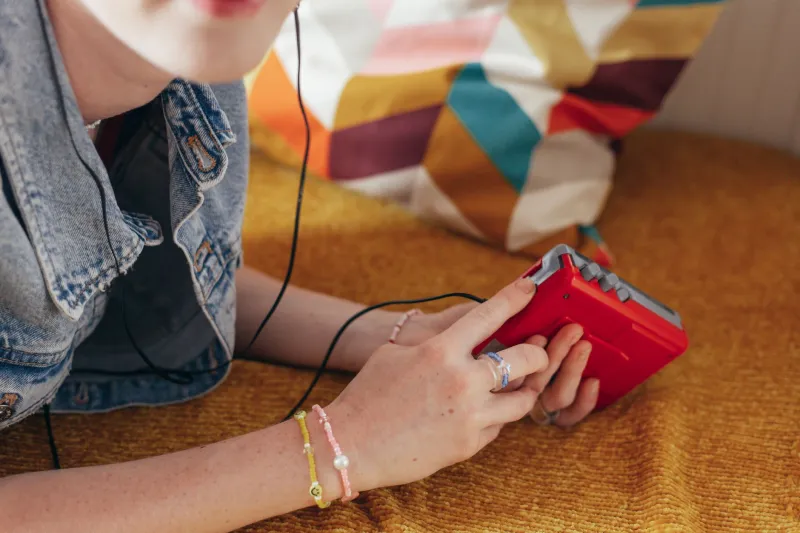
You held the cassette. You read the liner notes. You rewound manually — sometimes with a pencil jammed through the spool — and fast-forwarded past the songs you didn't care about until you landed on the one you needed. Getting to your favorite track required physical effort and deliberate intention. That active engagement deepens memory formation in ways that passive streaming simply doesn't trigger.
Neuroscientists who study embodied cognition have found that physical interaction with objects during an emotional experience strengthens the memory of that experience. The ritual of putting on a CD, the specific mechanical click of a Discman lid closing, the careful rewind to the beginning of a song — all of that physical context became fused with the music itself. The song and the act of accessing it got stored together. Now, even without the physical object, the memory of the ritual can be triggered by just a few opening notes.
'90s Songwriting Went Straight for the Jugular
None of this neuroscience would matter if the music itself hadn't been doing something specific and powerful. And it was.
The dominant songwriting mode of the '90s — across grunge, alternative, pop-punk, R&B, and singer-songwriter — was emotional directness pushed to the point of discomfort. Alanis Morissette wasn't being subtle. Neither was Kurt Cobain, Fiona Apple, Lauryn Hill, or Tupac. The era had a cultural permission structure that actively rewarded emotional exposure, and songwriters leaned into it hard.
For a teenager in the middle of experiencing emotions they had no vocabulary for, hearing an adult voice those exact feelings — loudly, unapologetically, with a full band behind them — was neurologically and psychologically significant. The song became a container for the feeling. Once that association is made during a high-intensity emotional state, it's essentially permanent. The song doesn't just remind you of the feeling. It is the feeling, stored in audio form.
This is also why your first heartbreak songs hit differently than anything that came after. The first time you experience romantic devastation, your brain is encountering an entirely new emotional category. Whatever song was playing during that first encounter gets permanently designated as the soundtrack to that emotional state. Every subsequent heartbreak activates the same neural pathways — and pulls the same songs back up.
Why Nothing Since Has Quite Replaced It
People who were teenagers in the '90s sometimes feel guilty about dismissing newer music, as if it's some kind of generational arrogance. It's not. It's just timing.
The music you encountered at thirty-five, no matter how objectively excellent, was heard by a brain that had already completed its major construction phase. The emotional intensity of daily life tends to level out. The repetition that burned those teenage songs into your memory doesn't happen the same way. And the physical rituals that fused the listening experience into something tactile and intentional have been replaced by frictionless, forgettable convenience.
People who were teenagers in 2015 will feel the same way about their era's music when they're in their forties. The decade matters less than the developmental window.
But for anyone who was a teenager in the '90s, there's a specific combination of factors that lined up in a way that probably won't be replicated: a brain in its most receptive state, a limited musical landscape that forced deep familiarity, a physical relationship with recorded music that engaged the body as well as the ears, and a songwriting culture that refused to be emotionally polite.
That's why the song still hits. It's not just a song. It's a piece of you that got pressed into vinyl and plastic and magnetic tape before you even knew what was happening — and it's been waiting in the overhead speakers of every grocery store ever since.