Before You Had a Therapist, You Had a Playlist: How '90s Music Carried the Weight Nobody Talked About

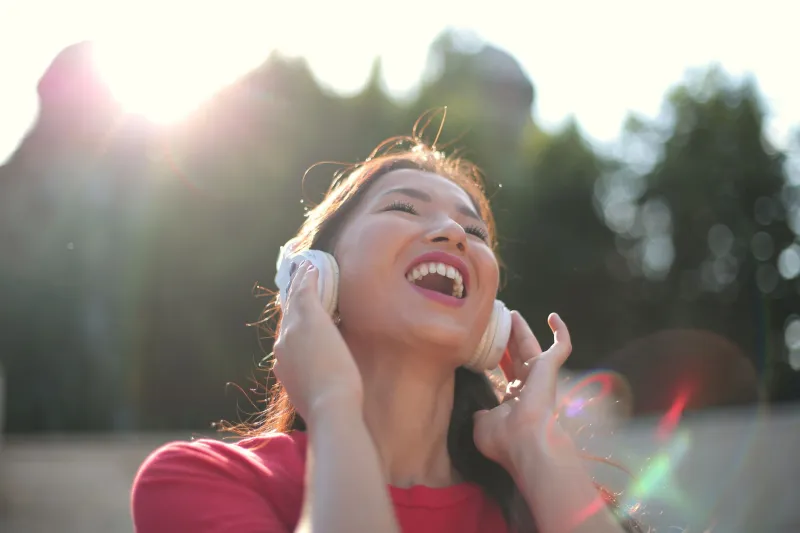
Somewhere in the mid-'90s, a teenager pressed play on a Discman and felt, maybe for the first time, like someone out there actually understood what was going on inside their head. No appointment needed. No co-pay. No explaining yourself to a stranger in a beige office. Just headphones, a cracked jewel case, and the strange, specific relief of hearing your own chaos reflected back at you through a speaker.
That's what '90s music did for a generation that had almost no cultural framework for talking about mental health. Therapy wasn't normalized — it was either a punchline or something whispered about in hushed tones. "Anxiety" wasn't a word most teenagers threw around casually. You were just "stressed out" or "being dramatic" or "going through a phase." And yet the music of that decade was doing something quietly radical: it was naming things that nobody else would.
The Era That Accidentally Invented Emotional Vocabulary
Gen X and older Millennials grew up in a cultural moment that simultaneously produced some of the most emotionally raw music ever recorded and told young people to walk it off. The disconnect was enormous. You could buy an album that described suicidal ideation in vivid, unflinching detail — but you couldn't bring it up at the dinner table.
Nirvana's In Utero didn't just sound like distress; it was distress, bottled and pressed onto a disc. Kurt Cobain's lyrics weren't carefully constructed metaphors — they were dispatches from a mind in genuine turmoil, and millions of kids recognized the frequency immediately. Tracks like "Pennyroyal Tea" and "Dumb" gave names to feelings that had been floating around unnamed, and that act of naming alone was a kind of relief.
Alanis Morissette's Jagged Little Pill did something similar from a different angle. The anger in that record wasn't performed — it was raw and specific and occasionally uncomfortable in a way that felt true. "You Oughta Know" got the headlines, but songs like "Perfect" and "Not the Doctor" were the ones that quietly wrecked people who needed to hear that their emotional needs were legitimate, not a burden.
Slow Jams That Were Actually Crying Sessions
It wasn't just rock and grunge doing the heavy lifting. R&B and soul in the '90s had their own emotional depth that often got overlooked because the production was smooth and the videos were glossy. But Mary J. Blige's My Life — released in 1994 — was essentially a document of depression and survival dressed up in gorgeous production. Blige herself has talked openly about how dark that period was for her, and you can hear every bit of it in that record.
For a lot of people, putting on My Life late at night wasn't just listening to music. It was company. It was the feeling that someone else had been in the same dark room and made it out the other side. That's not a small thing when you're 16 and convinced nobody could possibly understand.
Maxwell, D'Angelo, Lauryn Hill — the neo-soul movement of the late '90s carried a similar emotional intelligence. Hill's The Miseducation of Lauryn Hill wrapped profound personal pain inside arrangements so beautiful you might not clock how heavy the content actually was until the third or fourth listen.
When the Noise Was the Point
For others, the catharsis was less about lyrics and more about volume. There's a reason Nine Inch Nails built such a devoted following among people who were struggling. The Downward Spiral is not a comfortable record — it was never meant to be. But for listeners who were dealing with depression or self-destructive impulses, hearing that acknowledged so directly, without softening or moralizing, felt like being seen.
Smashing Pumpkins' Mellon Collie and the Infinite Sadness was sprawling and grandiose and occasionally overwrought — and that was exactly right for the emotional register of being a teenager who felt everything at maximum volume. Billy Corgan was writing about alienation, mortality, and the specific misery of feeling like an outsider, and he was doing it on a double album, because apparently one disc wasn't enough to hold all of it.
Even bands like Weezer, whose early work had a nerdy, self-deprecating humor to it, were threading real vulnerability through the jokes. Pinkerton — which flopped on release and has since been completely reappraised — was Rivers Cuomo writing about loneliness and longing in a way that felt almost embarrassingly personal. Listeners didn't know what to do with it in 1996. By the mid-2000s, it had become a cult classic precisely because of that rawness.
What Those Songs Are Still Doing
Here's the thing about music that was built to carry emotional weight: it doesn't expire. Pull up "Black" by Pearl Jam on a random Tuesday afternoon when work is grinding you down, and it will do exactly what it did in 1992. Maybe more, because now you've got context. You've got adult losses layered on top of the teenage ones, and Eddie Vedder's voice hits different when you've actually lived through some things.
That's the strange gift those records left behind. They weren't just entertainment — they were infrastructure. A whole generation built their emotional coping architecture around albums and songs that did the work of therapy before most of them had ever sat on a therapist's couch. And when life gets heavy now, the instinct is still there: find the right song, turn it up, let it do the thing it's always done.
Therapy is more accessible and less stigmatized now, which is genuinely good. But don't underestimate what a well-timed song can still accomplish. Sometimes you don't need to process — you just need to feel understood for three and a half minutes. The '90s were very, very good at that.
The Language That Got There First
Mental health conversations look completely different in 2025 than they did in 1995. The vocabulary is broader, the cultural permission is wider, and the resources are more visible. But for a lot of people in their late 30s and 40s, the first time they ever had language for what they were going through — the first time something said yes, that thing you're feeling is real — it came from a song.
That's not a small legacy. That's a generation's worth of emotional survival, pressed into plastic and magnetic tape, passed around in school hallways and dubbed onto mixtapes and played on repeat in bedrooms where the door was firmly shut.
The '90s didn't solve the mental health conversation. But it started it, quietly, in the only language it had available: three chords, a hook, and the nerve to say the thing out loud.