When the Song Knew Before You Did: How '90s Music Carried You Through Your Worst Moments
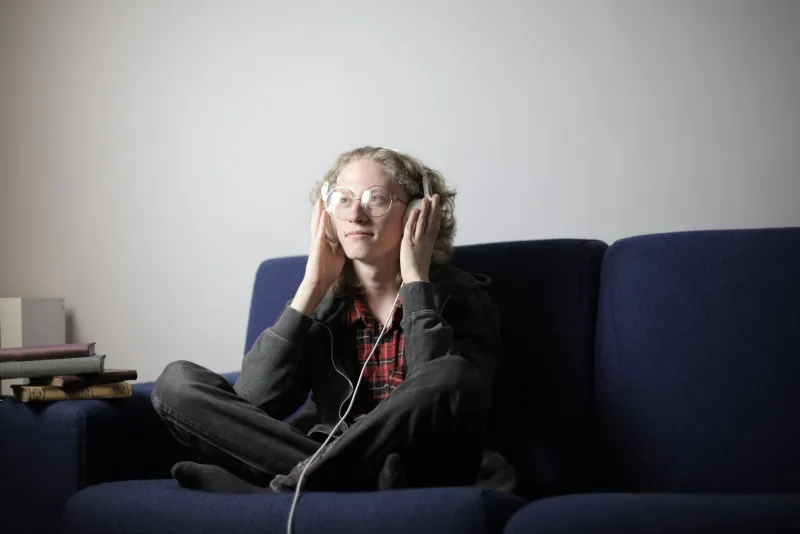
You remember the exact song. Maybe it was 3 a.m. and you were sitting on the floor of your bedroom with the lights off. Maybe it was the first drive home after a breakup, or the quiet week after someone you loved was gone. And then it came on — that song — and something cracked open in a way that felt both terrible and necessary.
For a generation that came of age in the '90s, music wasn't just background noise. It was infrastructure. It held the weight of moments that had nowhere else to go.
The Pause Button as a Ritual
Before streaming, before playlists that reshuffled themselves every time you blinked, there was the physical act of pressing pause. You'd hit that button, breathe, and press play again. Over and over. Four Alanis Morissette tracks deep into Jagged Little Pill. Halfway through a Jeff Buckley record you'd borrowed from an older sibling and never returned.
That repetition wasn't accidental. It was regulation — emotional regulation, to use the clinical term. Dr. Lisa Torres, a licensed therapist based in Chicago who works with adults navigating grief and identity, puts it plainly: "When people are in emotional distress, they gravitate toward music that mirrors their internal state. It's not about making themselves feel worse. It's about feeling witnessed. In the '90s, there was a particular rawness to the production and the lyrics that made that mirroring feel almost uncomfortably accurate."
Songs like R.E.M.'s "Everybody Hurts," Sarah McLachlan's "I Will Remember You," or even something as mainstream as Boyz II Men's "It's So Hard to Say Goodbye to Yesterday" weren't just popular. They were functional. They gave people a container for feelings that didn't have words yet.
Why That Era Hit Different
There's a cultural argument to be made here, separate from the neuroscience. The '90s occupied a strange emotional bandwidth. It was post-Cold War, pre-9/11 — a decade that felt suspended between one kind of dread and another. That liminal quality bled into the music. Artists were processing disconnection, suburban alienation, grief, rage, and longing in ways that felt genuinely unfiltered.
Nirvana wasn't just loud. Pearl Jam wasn't just earnest. Toni Braxton wasn't just sad. These artists were working through something, and listeners felt that transaction happening in real time. There was no algorithmic polish. No brand strategy softening the edges. When Fiona Apple released Tidal in 1996 and sang about damage and desire with the kind of specificity that made you feel personally called out, it wasn't a marketing angle. It was just true.
Cultural critic and music journalist Devon Marsh, who has written extensively about '90s alternative and R&B, describes it this way: "That decade produced music that was emotionally precise in a way that felt almost accidental. Artists weren't necessarily trying to be therapeutic. They were just being honest. And honesty, it turns out, is exactly what people in crisis need to hear."
The Songs That Became Emergency Contacts
Ask anyone who was a teenager in the '90s to name the song they played on repeat during their worst year, and they'll answer without hesitation. That specificity is telling.
For some, it was Mazzy Star's "Fade Into You" — a song so atmospheric and melancholy it functioned almost like a sedative. For others, it was the controlled devastation of Sinéad O'Connor's "Nothing Compares 2 U," a track that somehow managed to be about every loss at once. TLC's "Waterfalls" showed up for a lot of people in ways that surprised them — ostensibly a song about bad decisions, it hit like a eulogy for people they'd already lost.
What these songs share isn't genre or tempo. It's emotional permission. They told listeners: this feeling you're having is real, it's valid, and you're not alone in it. That's not a small thing. For a lot of people, those songs were the first place they ever felt genuinely understood.
What Neuroscience Says About the Replay Loop
Here's where it gets interesting. Research in music cognition consistently shows that emotionally charged memories are encoded more deeply than neutral ones, and that music heard during those moments becomes chemically bonded to the experience. The amygdala — the brain's emotional processing center — essentially tags certain songs as significant, and those tags don't fade easily.
This is why hearing the opening bars of "Black" by Pearl Jam can stop a forty-year-old in their tracks in the middle of a grocery store. The brain isn't just recognizing a song. It's reopening a file. The feelings that were stored alongside that music get retrieved along with it — not as a memory of feeling something, but as the feeling itself, arriving fresh.
Dr. Torres calls it "somatic recall." "The body remembers," she says. "Music that carried emotional weight in formative years becomes a kind of time machine. People aren't being dramatic when they say a song takes them back. Neurologically, it actually does."
Why We Still Go Back
Here's the thing nobody talks about enough: people return to these songs on purpose. Not just when they're ambushed by a random radio moment, but deliberately, during hard times, decades later. A divorce at 42. A parent's illness at 38. A layoff that reshuffles everything at 45. And the playlist that comes out isn't new music. It's the same songs from 1994.
That's not nostalgia in the soft, comfortable sense. It's something more functional. Those songs already proved they could hold weight. They have a track record. When everything feels uncertain, returning to music that once helped you survive something is a rational move.
It's also, in a quieter way, a form of self-compassion — a reminder that you've been through hard things before and made it out the other side, even if the soundtrack was a little devastating.
The Songs That Still Know Your Name
The '90s didn't have a monopoly on emotional music. Every decade produces songs that matter. But there's something about that particular window — the production choices, the cultural context, the rawness of the artists, and the age at which most of us first heard them — that made the music of that era especially good at the hard work of being human.
So if a specific song still catches you off guard at the wrong moment, if a melody can still reach in and touch something you thought you'd dealt with years ago — that's not a bug. That's the whole point. The song knew before you did. And apparently, it still does.