When a Stamp and an Envelope Could Actually Change a Record: The '90s Artists Who Listened
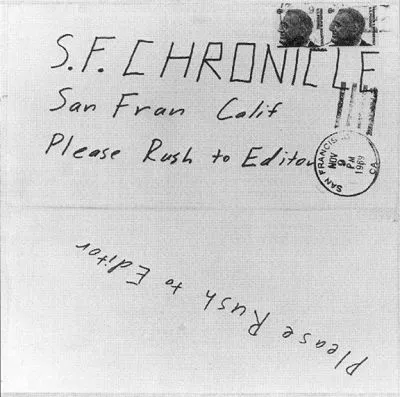
Photo: Zodiac Killer, Public domain, via Wikimedia Commons
There's something almost impossible to explain to anyone who discovered music through a streaming platform: the idea that you could write a letter to your favorite artist, seal it in an envelope, and have a legitimate shot at changing what their next album sounded like. Not through a comment section. Not through a viral tweet. Through actual handwriting, a first-class stamp, and the slow miracle of the US Postal Service.
That was the '90s. And it was more powerful than it sounds.
The Physical Weight of a Fan Letter
In the pre-internet era, fan mail wasn't a novelty — it was a real communication channel. Record labels had PO boxes. Artists had managers who sorted through stacks of envelopes. Some musicians, especially the ones who came up through the indie underground or built cult followings on the road, read their own mail at kitchen tables or on tour buses between cities.
The letters that arrived weren't always love notes. Plenty of them were critiques. Fans wrote about songs they wished had been sequenced differently, about album closers that felt too abrupt, about B-sides they'd heard on the radio that deserved a proper release. Some wrote about personal experiences that a lyric had gotten almost right — but not quite.
And here's the thing that makes this era genuinely different from today: artists had the space and the motivation to actually absorb that feedback. There was no real-time data dashboard telling a musician how many listeners dropped off at the two-minute mark of track seven. The only human signal they got was the one somebody bothered to write down and mail.
When Letters Actually Moved the Needle
The stories are scattered across interviews, liner notes, and oral histories, but they're consistent enough to form a pattern. Tori Amos has spoken in various interviews about how deeply she engaged with her correspondence in the early-to-mid '90s, particularly around Little Earthquakes and Under the Pink. Her fanbase — fiercely devoted and emotionally articulate — sent mail that she described as genuinely informing how she understood her own work. That's not a small thing. That's an artist letting the audience hold part of the mirror.
On the indie side, labels like Sub Pop and Matador were small enough that the line between staff and fan was almost nonexistent. Bands on those rosters often had direct contact with listeners who showed up to every regional show and wrote regularly. When a fan's letter pointed out that a pressing had a mastering error, or that a lyric sheet had gotten a line wrong, it got fixed on the next run. The feedback loop was tight because the operation was human-scaled.
Even major-label artists weren't entirely insulated. Several acts from the alternative boom of the early '90s have mentioned in retrospect that the letters they received during the making of a follow-up record — not after it dropped, but while it was still being shaped — influenced sequencing decisions, pushed certain tracks from B-side to album cut, or convinced an artist to keep a raw, unpolished version instead of re-recording it cleaner.
Bonus Tracks Born From the Mailbag
One of the more tangible ways fan letters shaped '90s releases was through expanded editions and bonus tracks. When a single got a strong enough response — not just in sales, but in actual correspondence — labels sometimes pushed to include acoustic versions, alternate mixes, or previously shelved recordings on later pressings or international releases.
This was especially common in the CD single era, when a physical single might include two or three bonus tracks that existed specifically because enough people had asked about a demo version or a live recording they'd heard on a bootleg tape. The ask was direct: I heard you play this differently on the radio session in Chicago. Is there any way to get that version? And sometimes the answer was: Yeah, we'll put it on the UK single.
That's fan influence operating in the most literal possible way. Not a metric. Not an engagement score. A request.
The Contrast Is Almost Uncomfortable
Put that next to what artists navigate now, and the difference is stark in both directions. Today's musicians have access to an almost overwhelming volume of listener data. They can see which eight seconds of a song got clipped for a TikTok, which track gets skipped most often, which lyric got quoted in the most saves. The feedback is constant, granular, and relentless.
But it's also anonymous, aggregated, and emotionally flat. A skip is just a skip. It doesn't tell you whether someone turned the song off because they hated it or because they'd already heard it forty times that week. A high save number doesn't explain why a track connected. The data is wide but not deep.
A handwritten letter, on the other hand, was narrow and very, very deep. It was one person, taking real time, telling you exactly what they felt and why. The volume was lower. The signal was clearer.
What Got Lost When the Mail Stopped Coming
The shift happened gradually through the late '90s and then accelerated fast. Email made written fan communication easier but somehow less weighted — it costs nothing to send, so it arrived differently than something that required an envelope and a trip to the mailbox. Then forums took over, then social media, then the comment section became the default venue for everything.
None of those replacements are bad, exactly. But they changed the nature of the conversation. An artist reading a comment thread is swimming in volume. An artist reading a stack of letters is having sequential, individual conversations. The experience of being heard — really heard — felt different on both ends.
The '90s weren't perfect. Plenty of fan mail went unread, got lost in label mail rooms, or ended up in a bin somewhere. Not every artist was as engaged as the ones who made it into the oral histories. But the possibility was real in a way it genuinely isn't anymore. The channel existed. The path from your living room to the artist's hands was open.
The Intimacy That Algorithms Can't Replicate
What the fan letter era captured — and what we don't really have a substitute for — was a specific kind of artistic intimacy. The sense that the person who made the thing you loved might actually know you existed. Not as a listener ID in a database, but as a human being who sat down and wrote something because the music mattered enough to respond to.
Some artists still try to approximate this. They do Reddit AMAs, reply to DMs in bursts, post voice notes on Patreon. The intention is the same. But the architecture is different, and architecture shapes experience in ways we don't always notice until it's gone.
Somewhere in a storage unit or a box in an attic, there are stacks of '90s fan letters that changed things — shifted a track listing, kept a song alive, made an artist feel like the work was worth continuing. Most of those letters don't have names attached to famous outcomes. They just quietly did their job.
That's a kind of cultural power that doesn't get measured, which might be exactly why it worked.