Thank You Pages and Tiny Print: Why Gen Z Can't Stop Obsessing Over '90s Liner Notes
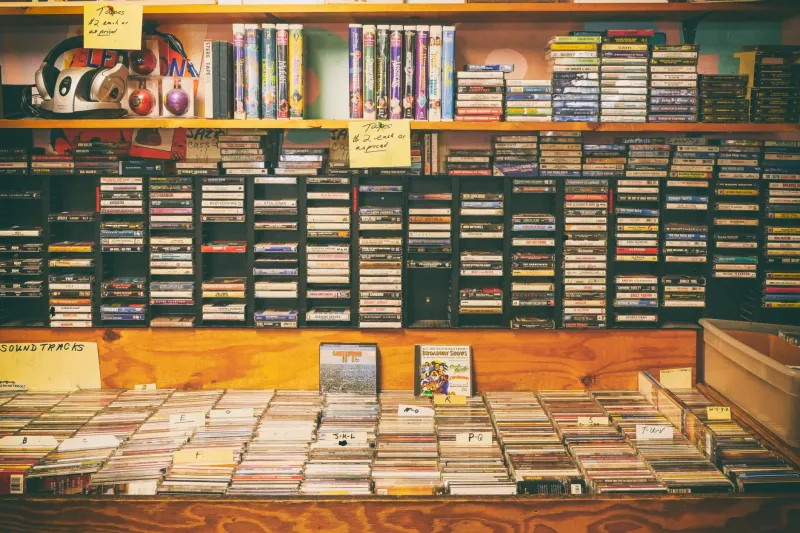
There's something almost archaeological about cracking open an old CD case. Carefully unfolding the booklet, squinting at the microscopic font, trying to decode whether that handwritten scrawl in the thank-you section says "Mom and Dad" or "Mom and Dave." For a lot of people who grew up in the '90s, that ritual was just part of buying music. You listened to the album, then you read the album. Sometimes you read it first.
Nobody told you to do that. It just felt necessary.
Fast forward to now, and something unexpected is happening. That same instinct — the need to get inside the music, not just stream it — is showing up all over TikTok and Bandcamp comment sections, driven largely by people who were barely alive when those CDs were pressed.
The Booklet Was Always the Bonus Track
Liner notes have existed since the LP era, but the '90s were genuinely their golden age. CD booklets gave artists more physical real estate than a cassette j-card ever could, and a lot of them used every single millimeter of it. You had full lyrics printed with intentional spacing. You had production credits so detailed they named the specific studio where the drum fills were recorded. You had thank-you lists that read like a short story — the kind where you'd recognize three names and spend an hour wondering who the other forty were.
Artists like Alanis Morissette, Tupac, Tori Amos, and Outkast treated the booklet as an extension of the record itself. The packaging wasn't promotional material — it was context. It told you who made this thing, who they loved, what they were going through, and sometimes what they wanted you to know that they couldn't quite say in the songs.
That intimacy wasn't accidental. It was intentional craft.
When Streaming Deleted the Story
Then digital happened, and the booklet basically ceased to exist as a meaningful artifact. iTunes had a digital booklet feature that almost nobody used. Spotify has credits buried under a "Song Credits" tab that requires three taps to find and still doesn't show you everything. Apple Music does a slightly better job, but it's still a far cry from unfolding a six-panel insert on your bedroom floor.
For a long time, that loss felt inevitable. The trade-off was convenience, and convenience won. But something shifted when a generation that grew up entirely in the streaming era started asking a very reasonable question: who actually made this?
Not just the artist. The engineer. The session guitarist. The person who wrote the string arrangement. The producer's assistant who apparently saved the whole session at 3 a.m. and got a one-line shoutout in tiny italic font.
Those details, it turns out, are exactly what a certain kind of music fan is desperate for.
TikTok Made Liner Notes Go Viral
The format almost writes itself for short video. Someone holds up a CD booklet — usually something from the mid-to-late '90s, often an R&B or alternative record — zooms into the thank-you section, and reads it out loud. The comments fill up immediately. People tagging friends. People sharing their own discoveries. Someone always finds the one shoutout that aged spectacularly or the cryptic message that spawned a decade of fan theories.
Albums like My Beautiful Dark Twisted Fantasy get this treatment constantly, but so do more obscure records. A deep cut from a forgotten '90s neo-soul act can suddenly get thousands of views because somebody noticed the producer thanked a collaborator who later became famous under a completely different name.
The liner note becomes a breadcrumb trail. And Gen Z, raised on internet rabbit holes, knows exactly how to follow one.
Bandcamp Is Quietly Bringing It Back
While the major platforms were busy removing friction from the listening experience — which largely meant removing everything except the audio — Bandcamp was quietly becoming the place where artists could put context back in.
Independent musicians selling through Bandcamp have increasingly started treating their digital releases the way '90s artists treated their CD booklets. Detailed credit sections. Long-form notes explaining the recording process. Personal thank-yous that read more like journal entries than press releases. Some artists are going further, designing downloadable PDF booklets that mirror the physical format completely — full lyrics, photos, handwritten elements scanned and embedded.
It's not a coincidence that Bandcamp's most loyal users tend to be people who care deeply about music as an object, not just a service. The platform's culture actively rewards that kind of investment from artists.
Handwriting Is Having a Moment
Of all the things Gen Z has latched onto from the '90s music world, the handwritten element might be the most surprising. In an era of clean sans-serif fonts and algorithmically optimized cover art, there is something genuinely disarming about seeing an artist's actual handwriting inside a booklet.
Artists like Phoebe Bridgers and boygenius have leaned into handwritten elements in their physical releases, and the response has been intense. Fans photograph them, post them, zoom in on the letters. The imperfection is the point. It signals that a real human being sat down and physically wrote something for you.
That feeling — of being written to rather than marketed at — is exactly what made '90s liner notes feel different. It wasn't just information. It was personality. And personality is what streaming has the hardest time delivering.
What Musicians Today Can Learn From the Booklet Era
If you're an artist putting out music right now, the liner notes renaissance isn't just a nostalgia trend to observe from a distance. It's a genuine signal about what fans are hungry for.
They want to know the story behind the song. They want the names of everyone who touched the record. They want the inside joke that only three people will understand. They want the messy, human, slightly embarrassing thank-you to someone who may or may not have stayed in your life since the album dropped.
You don't need a physical CD to deliver that. You need the intention that used to go into making one.
The '90s didn't invent liner notes, but they perfected the idea that the space around the music matters just as much as the music itself. Gen Z figured that out by holding a booklet under a phone camera and reading it out loud to strangers on the internet.
That's not a small thing. That's the whole thing.