Hustle Before the Algorithm: How '90s Teens Built Underground Music Empires in Their Bedrooms
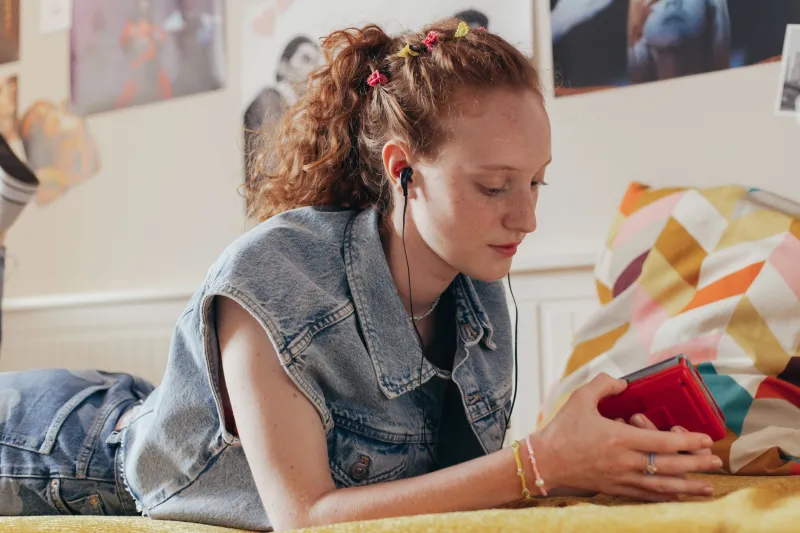
Somewhere in suburban America, around 1997, a fifteen-year-old was running a small business. He had a dual-cassette boombox, a spindle of blank tapes from the drugstore, and a handwritten price list taped to the inside of his locker. Three dollars got you a full album. Five got you a custom mixtape with hand-labeled track listings done in his neatest printing. He had regulars. He had a waitlist. He had, without knowing it, a customer base.
Nobody called it entrepreneurship back then. Most adults called it a problem. But what was actually happening in bedrooms and basements across the country was something genuinely interesting — a generation figuring out supply chains, demand signals, and community distribution before any of those concepts had been workshopped into a college business curriculum.
The Tape Game Came First
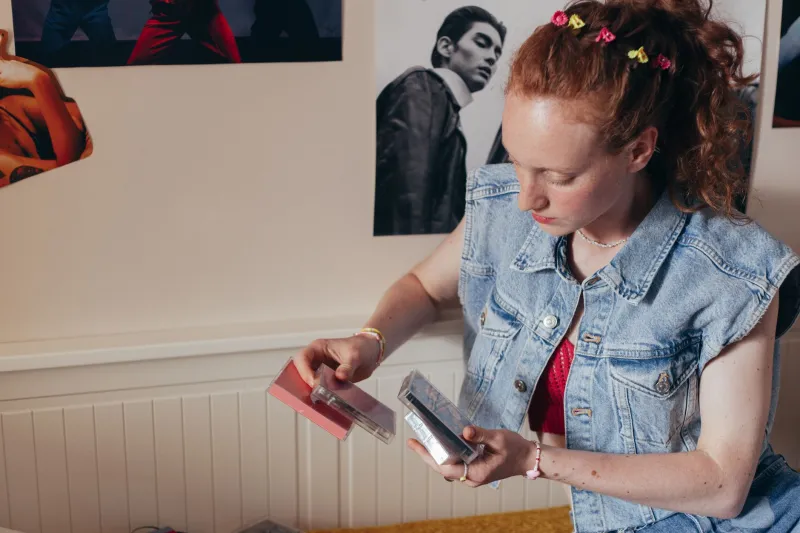
Long before anyone burned a CD, the cassette tape was the original unit of the underground economy. The mechanics were simple: you had a boombox with a record function, a stack of TDK or Maxell blanks, and access to either a friend's collection or a library that let you check out albums. That was enough to get started.
What made it interesting wasn't the copying — it was the curation. The kids who thrived in this space weren't just duplicating albums wholesale. They were building reputations around taste. A good mixtape dealer was also, functionally, a tastemaker. You weren't just buying music; you were buying someone's editorial judgment. That distinction mattered. The tape that just had Doggystyle front to back was a commodity. The tape that opened with a deep cut from a B-side, flowed into something you'd never heard, and landed on a closer that made total sense — that was a product with real perceived value.
People paid for that. And they came back.
When CD Burners Changed Everything
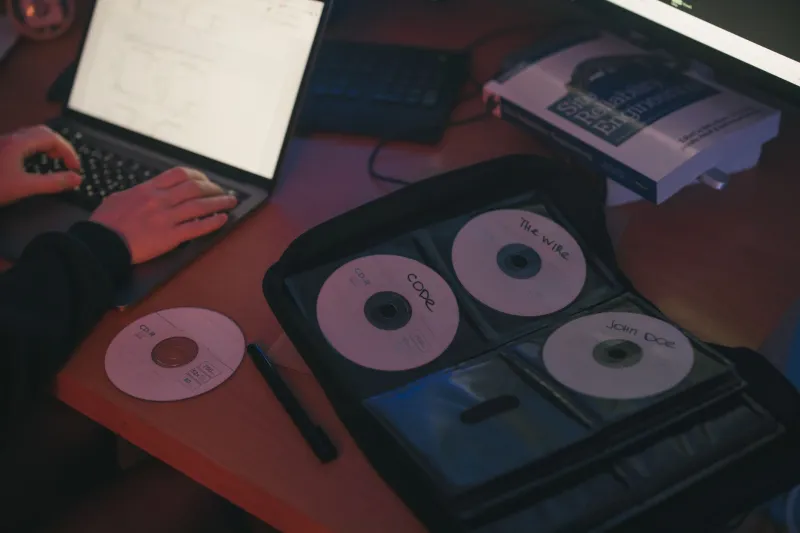
The late '90s introduced a new variable into the equation: the CD-R. When writable disc drives started showing up in home computers — still a luxury, still expensive, still the kind of thing that made your parents nervous about the electricity bill — the scale of what was possible shifted overnight.
A cassette dub took real time. You had to play the thing through in full. A CD burn, once the software was figured out and the track listing was assembled, could be done in under ten minutes. That changed the math entirely. What had been a cottage operation could suddenly look a little more like a production line.
Some kids leaned into it hard. There were genuine small networks — loosely organized, word-of-mouth only — where one person with a burner would supply three or four others who handled distribution at different schools. Somebody managed the requests. Somebody handled the blanks. Somebody did the artwork, printing paper inserts on inkjet printers and cutting them down to fit jewel cases with craft scissors. It was division of labor. It was, whether anyone recognized it at the time, logistics.
The margins were ridiculous by any adult standard — we're talking a few bucks per disc — but the skills being developed were not. Inventory management, customer relationships, brand identity through consistent packaging, even basic pricing strategy. All of it was happening in real time, with real stakes, funded by lawn-mowing money and birthday checks.
Napster Blew the Roof Off
By 1999, Napster had arrived and rewritten the rules entirely. Suddenly the scarcity that had made the physical bootleg economy function — you needed blanks, you needed equipment, you needed proximity to the right people — evaporated. Anyone with a dial-up connection and enough patience to wait forty-five minutes for a single MP3 to download could access almost anything.
The bedroom distributors didn't disappear overnight, but they had to adapt. The ones who survived the Napster disruption were the ones who understood that the product was never really just the music. It was the relationship. It was knowing that your guy had the album before it dropped, or that he'd tracked down the import version with the bonus tracks, or that the mix he put together for your drive to the beach was going to be exactly right. That couldn't be replicated by a search bar.
What Napster actually did — beyond the obvious chaos it unleashed on the music industry — was give a generation of bedroom entrepreneurs their first real lesson in market disruption. The platforms that arrived later, the ones that turned digital distribution into something enormous and monetizable, were built on instincts that a lot of their founders had already developed in exactly this kind of scrappy, low-stakes environment.
What the Bootleg Economy Was Really Teaching Us
Here's the thing that tends to get lost when people talk about '90s music piracy: most of the teenagers involved weren't thinking about sticking it to the record labels. That framing came later, retrofitted onto the story by people trying to make it more ideological than it was. The reality was simpler and, in some ways, more interesting.
These kids were filling a gap. Music was expensive. CDs retailed for sixteen, seventeen, eighteen dollars at a time when minimum wage was barely above five bucks an hour. The official channels were priced out of reach for a huge portion of the audience most hungry for the product. The bootleg economy wasn't a rebellion against music — it was a desperate attempt to access it.
And in the process of building those access networks, something genuinely valuable got transmitted. A comfort with DIY infrastructure. A sense that you didn't need permission to build something useful. An understanding that community trust was a real asset, one that took time to build and could be destroyed quickly by cutting corners. Those aren't small lessons. Those are the foundational instincts behind a lot of what eventually became the creator economy, the independent music ecosystem, and the whole ethos of building audiences outside the gatekeepers.
The Basement Was the First Platform
It's easy, from here, to look back at the burned CD operation or the mixtape ring as a curiosity — a charming artifact of a pre-streaming world. But the more honest read is that those bedrooms were early prototypes of something. The logic of Bandcamp, the community dynamics of SoundCloud in its early days, the way independent artists now build direct relationships with listeners — all of that has a clear ancestor in the teenager who knew exactly what his friends wanted to hear and figured out how to get it to them.
The tools scaled. The algorithm replaced the locker-side price list. The streaming platform replaced the spindle of blank discs. But the underlying instinct — find the audience, serve the audience, build something real from the ground up — that part didn't change at all.
Somewhere, that fifteen-year-old with the boombox and the handwritten catalog grew up. And there's a decent chance he's still in the business of getting music to people who want it, just with better margins and a lot less Scotch tape.