56k and Counting: How Slow Internet Made Us Fall Harder for Music
There was a sound that defined the late '90s just as much as any hit single. It wasn't coming out of your stereo or your TV. It was coming out of your beige desktop computer — that grinding, squealing, otherworldly screech of a dial-up modem handshaking with the world. And while that connection crawled toward something that barely resembled the internet we know today, something else was happening in the background. You were listening to music. Really listening.
Not passively. Not with one earbud in while you scroll through something else. Fully, completely, with nowhere else to be — because the computer was busy, the phone line was tied up, and you had absolutely nothing to do but sit with whatever was already in your CD player.
The Accidental Listening Session
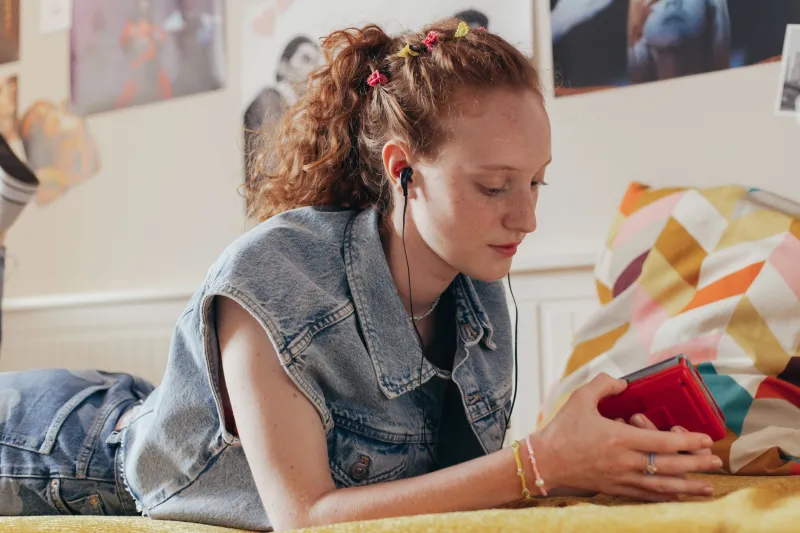
Here's the thing about waiting for a 4MB MP3 file to download on a 56k connection: it took somewhere between twenty minutes and forever. And that's if nothing interrupted it. If your mom picked up the phone downstairs, you were starting over. So you learned pretty quickly that you didn't sit at the computer waiting. You put on an album, flopped onto your bed, and let it play.
That's not a small thing. That's the entire album, front to back, without skipping. Track seven that you always fast-forwarded through? You heard it this time. The weird instrumental interlude before the closer? You sat with it. The hidden track that kicked in after four minutes of silence at the end of disc two? You actually made it there.
The friction wasn't a bug. It was, completely by accident, a feature.
Liner Notes Were the Original Deep Dive
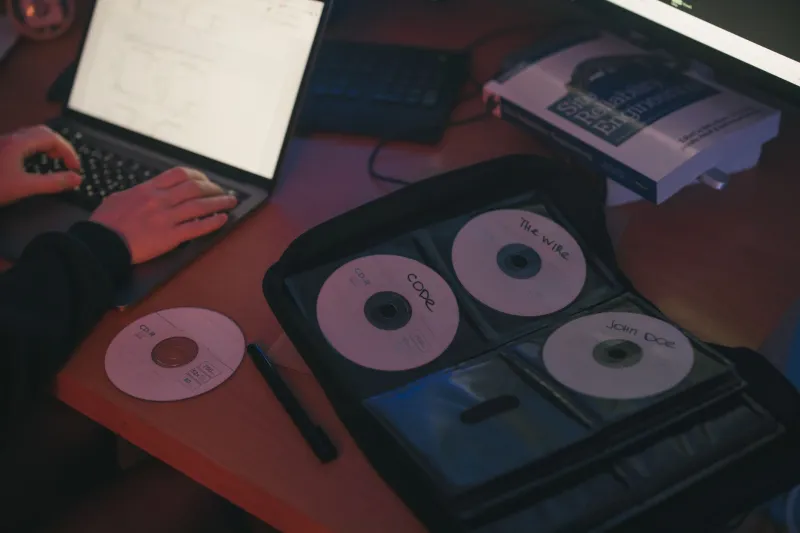
While the modem did its thing, the CD case was open on your desk. Not because you needed it — you knew the words by now — but because there was something almost meditative about reading through it again. The thank-you lists that name-dropped producers and engineers you'd never heard of. The cryptic quotes that seemed like they meant something huge if you could just crack the code. The photography that looked like it was shot on a disposable camera in someone's backyard at 2 a.m.
You weren't just a fan. You were a student. And the liner notes were the curriculum.
There's a reason so many '90s music obsessives can still tell you who played bass on their favorite deep cut, or which producer worked on the B-side of a single they found in a bargain bin. That information lived in the physical packaging, and you had time — so much time — to absorb it. Streaming killed the liner notes almost entirely. Even when digital booklets exist, nobody's reading them while they wait for a file to load, because nothing loads anymore. Everything is just there, instantly, and then it's gone from your attention just as fast.
The Download Was the Destination, Not the Music
Here's a wild reframe: for a lot of '90s and early 2000s kids, the actual downloaded MP3 was almost anticlimactic. You already knew the song. You'd been living with the CD for months. The download was a trophy — proof that you'd navigated Napster or Kazaa or LimeWire successfully, found the right file (not the one that was secretly a Rick Astley song mislabeled as something else), and survived the wait.
The music itself had already done its work. It had worked on you slowly, over repeated full listens, during all those hours the internet was busy being slow. The MP3 was just a souvenir.
Compare that to today, where a song can go from release to background noise in about 48 hours. Discovery, saturation, and abandonment happen in a single week. There's no waiting. There's no sitting with something. There's no version of you that has heard the same twelve songs so many times that they've become part of your actual personality.
Why Some People Are Deliberately Slowing Back Down
It sounds almost absurd to say out loud, but there's a growing corner of the internet — which is ironic, given what we're talking about — dedicated to recreating the experience of intentional, patient listening. Vinyl is the obvious entry point. Record sales have been climbing for years now, and a big part of the appeal isn't just audio quality. It's the ritual. You have to get up to flip the record. You're committed to a side. You're present in a way that a Spotify playlist just doesn't demand.
But some people are going further. There are online communities built around "album listening sessions" where participants agree to put on the same record at the same time and sit with it, no multitasking. There are folks who deliberately leave their phones in another room when they put on music, just to approximate the focused attention that dial-up accidentally enforced. Some have even gone back to physical media entirely — not as a collector's hobby, but as a genuine listening practice.
They're chasing something real. They just might not have the exact words for what it is.
What the Modem Actually Taught Us
Patience is too simple a word for it. It wasn't just that we waited — it's that the waiting had a texture. It sounded like something. It felt like anticipation that had nowhere to go except inward, back toward whatever was already playing in the room.
The dial-up era created listeners by accident. It forced a kind of attention that nobody was trying to cultivate. The technology was limited, the infrastructure was creaking, and the experience was genuinely frustrating — but inside that frustration, something quiet and lasting was happening. Albums were getting under people's skin in ways that required time and repetition and physical engagement with the packaging.
Streaming is extraordinary. Nobody serious is arguing otherwise. But it optimized for access and completely deprioritized depth. You can hear anything in seconds, which means you never have to commit to anything. You can skip, shuffle, abandon, and move on without consequence.
Back when the modem was screaming and the download bar was frozen at 34%, you didn't have that option. The album played. You listened. And somewhere in that forced stillness, a song became yours in a way that felt permanent.
Some of us are still trying to get back there.