Stickered, Shelved, and Set on Fire: The '90s Culture War Over Music That Made Every Banned Album Sell Out
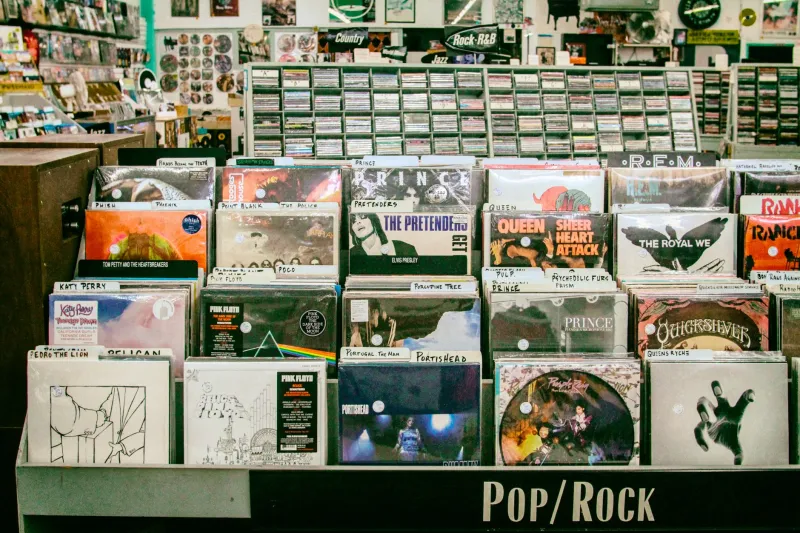
There's a particular irony at the heart of every censorship campaign: the louder you yell about something being dangerous, the more people want to hear it. Nobody understood this better — or benefited from it more — than the artists whose albums got banned, burned, and legislated against throughout the 1990s. The decade that gave us the culture war also accidentally gave those same artists the biggest megaphones of their careers.
The Sticker That Launched a Thousand Sales
Let's start with the black-and-white rectangle that changed everything. The Parental Advisory label — that little "Explicit Content" warning that started appearing on album covers in the mid-'80s and became ubiquitous by the early '90s — was designed by the Parents Music Resource Center to warn parents about objectionable content. Tipper Gore and her allies in Washington genuinely believed that labeling albums would keep harmful music out of young hands.
What happened instead was almost comically predictable. The sticker became a recommendation. If a teenager in 1993 was scanning the shelves at a record store and saw that black square on a cover, that was the album they wanted. The Parental Advisory label was, functionally, the best marketing tool the music industry never paid for.
Retailers complicated things further. Walmart and Kmart — two of the biggest music sellers in the country — refused to stock labeled albums, forcing artists to release sanitized versions or lose access to a massive chunk of the market. Some artists complied. Others refused and watched their street credibility spike accordingly. The choice itself became a statement.
2 Live Crew and the Courtroom That Couldn't Contain a Bass Line
No story captures the absurdity of '90s music censorship quite like what happened to 2 Live Crew. In 1990, a federal judge in Florida ruled that their album As Nasty As They Wanna Be was legally obscene — the first time in American history that a musical recording had received that designation. Record stores that sold it could face criminal charges. Copies were confiscated. The group's Luther Campbell was arrested after a live performance.
The courts eventually overturned the ruling. But by then, 2 Live Crew had sold millions of records, appeared on national television, and sparked a First Amendment debate that brought in everyone from legal scholars to George H.W. Bush. Luther Campbell, who had been a regional act out of Miami, was suddenly a household name. The attempted suppression didn't silence the music. It amplified it to a frequency the whole country could hear.
Marilyn Manson and the Town Hall Panic
By the mid-'90s, Marilyn Manson had become the designated villain of the culture war — a role the band occupied with obvious relish. Town halls were held. Petitions circulated. Religious groups organized protests outside concert venues. Various cities attempted to have shows canceled on the grounds that the performances constituted a threat to public morality.
The band's response was essentially to lean harder into everything that made people uncomfortable. The controversy generated the kind of press coverage that no publicity budget could have manufactured. Every protest outside a venue was a news story. Every politician who denounced the band from a podium was an unpaid advertisement. Antichrist Superstar and later Antichrist Superstar weren't just albums — they were events, loaded with cultural meaning that had been gifted to them by the people trying to shut them down.
Manson himself has said in various interviews that he understood the dynamic clearly. The outrage was part of the product. And the outrage machine in the '90s was running at full capacity.
Eminem and the Bipartisan Freakout
Few artists provoked a more sustained, cross-aisle panic than Eminem. His 1999 debut The Slim Shady LP and the 2000 follow-up The Marshall Mathers LP generated condemnation from conservative family groups, feminist organizations, LGBTQ+ advocates, and Democratic politicians simultaneously — a genuinely rare achievement in American political life.
Lynne Cheney testified before Congress about the content of his lyrics. The Gay and Lesbian Alliance Against Defamation ran organized campaigns against him. Tipper Gore, who by then had been fighting this battle for fifteen years, was still at it. And The Marshall Mathers LP sold 1.76 million copies in its first week, setting a record at the time for fastest-selling rap album in history.
The math was not subtle. Every news segment explaining why parents should be alarmed was a segment that told teenagers exactly where to direct their attention and their allowance money.
What the Panic Was Actually About
Strip away the specific albums and artists, and what you find underneath the '90s censorship battles is a much older anxiety: fear of what young people are becoming, and who's responsible for shaping them.
The decade marked a genuine demographic and cultural shift. Hip-hop was moving from regional subculture to mainstream dominance. Rock music was getting louder, darker, and more explicitly confrontational. The suburbs, which had been sold to post-war America as a safe container for family life, were producing teenagers who were angry in ways their parents hadn't anticipated and didn't know how to address.
Blaming the music was easier than examining the conditions that made the music resonate. It always is. But the artists understood something that the politicians didn't: you can't legislate your way out of a feeling. If the feeling is real — the alienation, the rage, the grief, the desire to transgress — the music that carries it will find its audience regardless of what sticker you put on the cover.
The Lasting Irony
The Parental Advisory label is still with us, now appearing on streaming platforms in digital form. It's been so thoroughly absorbed into music culture that it functions as pure genre signifier rather than warning. When you see it now, you don't think danger. You think: this is probably good.
That's the final joke the '90s played on the people who tried to kill the music. They didn't just fail to suppress it. They built the infrastructure that made it permanent. Every Senate hearing, every town hall protest, every Walmart ban, every court case — all of it went into the cultural record as evidence that this music mattered. That it was worth fighting over.
And music worth fighting over has a way of outlasting the fight.