Lights, Camera, Absolutely No Idea What We're Doing: The Glorious Chaos of '90s Backyard Discovery Culture
Somewhere in America, in a shoebox or a storage unit or the back of a closet that hasn't been opened since the Clinton administration, there is a VHS tape. On that tape, four kids in a garage are performing what they have described on the hand-labeled spine as "BAND PRACTICE — DO NOT WATCH." The drummer is using a bucket. The lead singer is wearing a flannel shirt three sizes too large and has clearly been studying Kurt Cobain photographs. Nobody is in tune. Everyone is completely convinced they're about to be famous.
This was the '90s discovery machine. And it was magnificent.
The Camcorder Was the Great Equalizer
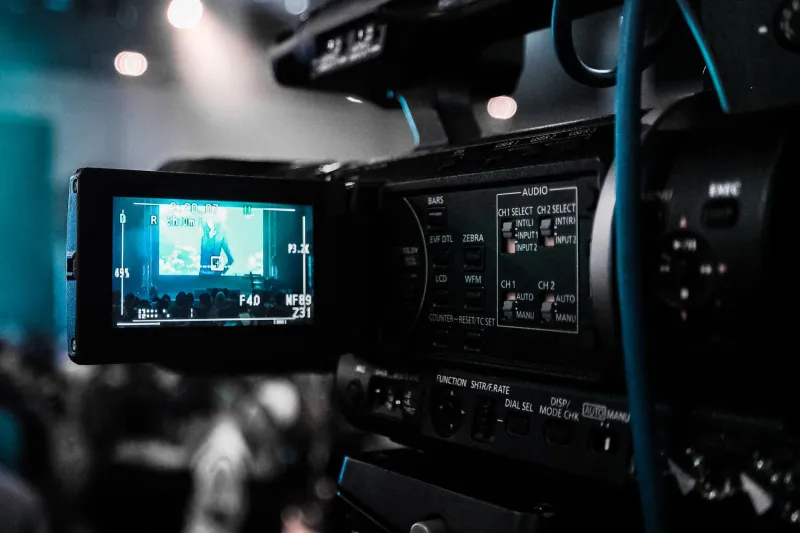
By the early '90s, consumer camcorders had dropped to a price point that put them within reach of a meaningful chunk of middle-class American households. This was a technological development with consequences nobody fully anticipated. Suddenly, the barrier between "performing for your family in the living room" and "having a permanent record of performing for your family in the living room" essentially disappeared.
Kids who had previously been limited to performing in front of mirrors could now perform in front of a lens. And performing in front of a lens, it turns out, activates something entirely different in the human brain. It implies an audience. It implies posterity. It implies, on some level, that what you're doing matters enough to be documented.
The resulting footage was, almost universally, chaotic. Lip sync performances to Mariah Carey that started strong and collapsed somewhere around the key change. Garage bands playing original songs with titles like "Dark Storm" and "Edge of Forever" that bore a striking resemblance to the last three songs on whatever alternative album was in heavy rotation that week. Dance routines to TLC and Destiny's Child that were ambitious in conception and catastrophic in execution.
And yet — every single person on those tapes believed, with complete sincerity, that they were witnessing the beginning of something real.
Talent Shows: The Local Colosseum
If the camcorder was the private arena, the school talent show was the public one. And the '90s school talent show operated by its own particular logic: anything was possible, the judges were your English teacher and the vice principal, and the audience was composed entirely of people who were either rooting for you or hoping you'd fail spectacularly.
The talent show circuit of the '90s produced a specific taxonomy of acts. There was always someone doing a magic trick that didn't work. There was always a kid playing a piano piece that was technically impressive but emotionally inert. And then there were the bands — the garage bands, the bedroom pop groups, the three-person hip-hop acts who had written one original song and performed it with the intensity of people debuting at Madison Square Garden.
Some of these acts were genuinely good. Most were not. But the '90s had a particular cultural generosity about this — an era before viral failure, before comment sections, before the permanent digital record of every bad performance. If you bombed at the Spring Talent Showcase, the footage existed on one tape, in one house, and could be destroyed. That safety net made risk-taking feel possible in a way it genuinely isn't anymore.
The People Who Actually Got Discovered
Here's where the story gets complicated, because for all the comedy of the era's amateur performance culture, the pipeline from garage to stage was real. Local music scenes in the '90s functioned as genuine discovery infrastructure. A&R representatives from major labels actually attended shows at small venues. Local radio stations ran contests where unsigned bands could win airtime. Open mic nights weren't just therapeutic exercises — they were auditions, sometimes, for people who were paying attention.
Usher was famously discovered at a talent show in Atlanta at age thirteen. Beyoncé — performing as part of the group that would eventually become Destiny's Child — was competing on the Houston talent show circuit before she was a teenager. These aren't anomalies. The '90s had a functioning ecosystem for finding talent in unexpected places, partly because the industry hadn't yet consolidated to the point where everything had to come through established channels.
The local battle-of-the-bands circuit sent acts to regional competitions that occasionally connected them with people who could actually do something about it. It was inefficient, it was chaotic, and it worked often enough that the mythology around it was justified.
What the Confidence Was Actually About
There's something worth examining in the sheer bravado of '90s kid performance culture. These were children and teenagers who had, objectively, very little evidence that they were talented, performing with the absolute conviction of people who had a great deal of evidence. Where did that come from?
Part of it was the era. The '90s were a decade that still believed in the overnight success story — the kid from nowhere who got heard by the right person and everything changed. MTV's entire mythology was built on this. Behind the Music made it seem like discovery was just a matter of being in the right place with the right song at the right moment. The industry hadn't yet revealed itself as the closed, relationship-dependent machine it actually was.
Part of it was also the absence of immediate feedback. Without YouTube comment sections or social media metrics telling you in real time exactly how many people cared (zero), the feedback loop was slow enough that optimism could survive. You performed at the talent show. People clapped. You didn't know if they were being polite. You chose to believe they weren't.
That choice — to believe you might be good before you had proof — is actually a fairly healthy psychological stance. It's the thing that makes people keep trying long enough to actually get good.
The Tape Is Still Out There Somewhere
The '90s DIY performance culture wasn't just about music. It was about a specific relationship to possibility that the decade made available to ordinary kids in ordinary places. You didn't need a label, a manager, or a social media following. You needed a camcorder, a garage, and enough nerve to press record.
Most of the resulting footage was terrible. Some of it was genuinely heartwarming. A small but real fraction of it was the beginning of something that actually became something.
And honestly? That ratio isn't so different from what streaming platforms produce today. The main difference is that the '90s version came with better flannel, worse audio quality, and the blissful absence of anyone being able to share it without your permission.
That VHS tape in the shoebox is safe. Probably. Don't go looking for it.