Thirty Seconds to Impress Everyone Who Called: The Lost Art of the '90s Answering Machine Greeting
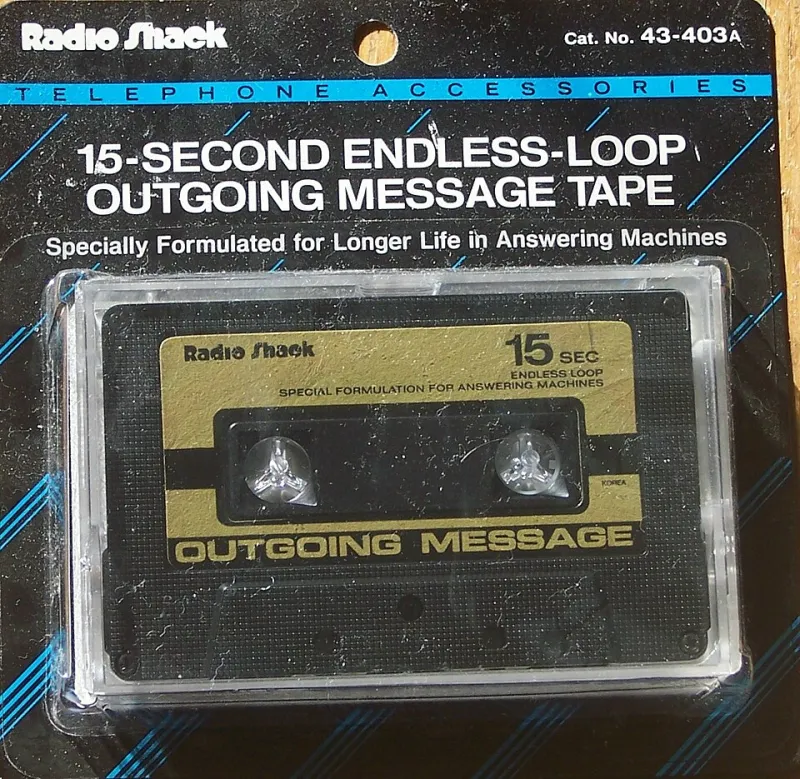
Photo: Wasted Time R, Public domain, via Wikimedia Commons
Somewhere between Seinfeld reruns and AIM away messages, an entire generation quietly developed an art form that nobody named, nobody archived, and almost nobody talks about anymore. You recorded it on a little tape inside a plastic box. You probably agonized over it more than you'd ever admit. And the moment someone called and got it instead of you, it said everything about who you were — or at least who you wanted people to think you were.
The '90s answering machine greeting was, without question, peak performance art for the everyday person.
The Machine That Demanded a Personality
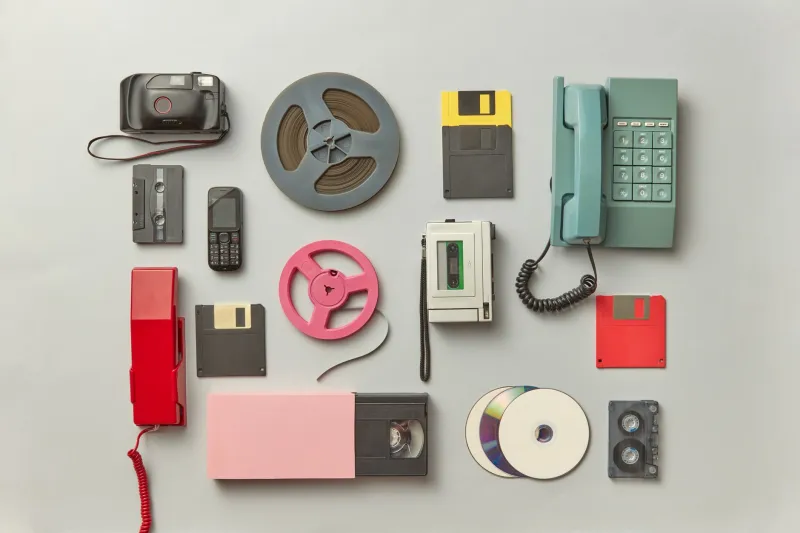
Let's set the scene. It's 1996. You've got a landline with a standalone answering machine sitting next to it, maybe a Panasonic or a GE with that little cassette tape rattling around inside. Your parents have their greeting. It's boring. It says the family name, asks the caller to leave a message, and ends. Functional. Lifeless. Deeply uncool.
But when you finally get your own phone line — a milestone roughly equivalent to getting a driver's license in terms of teenage independence — that greeting slot is yours. Completely yours. And suddenly it becomes this tiny, pressure-filled canvas where you have maybe thirty seconds to communicate your entire identity to whoever calls.
The stakes felt enormous. Your crush might call. Your friends would definitely call. And every single one of them would hear whatever you put there before the beep.
Song Snippets and the Curated Soundtrack
The most popular move? Lift a piece of a song and let it do the talking for you. Not the whole song — just the right eight bars. The ones that said what you couldn't say out loud.
Some people went moody. A few seconds of Nirvana or Smashing Pumpkins let callers know you weren't here for small talk. Others went funny — maybe a Weird Al clip, or the chorus of something intentionally ridiculous to signal that you didn't take yourself too seriously. And then there were the romantics, the ones who opened with something slow and aching from Boyz II Men or Mariah Carey, making absolutely sure their crush understood the emotional depth they were operating at.
Here's the thing about using a song snippet: you had to actually record it. You'd hold the phone up to a boombox, or figure out how to run a cable from your CD player to the machine, or just press record and hope the audio quality was good enough. It was DIY in the most literal sense. No apps. No clean audio files. Just you, your equipment, and whatever creative solution you could cobble together on a Tuesday afternoon.
The effort was part of the message.
Inside Jokes as Identity Markers
Beyond music, the inside-joke greeting was its own distinct genre. These were the greetings designed to reward the right callers and confuse everyone else. A reference to something that happened at a specific party. A callback to a bit that only your friend group would recognize. A fake-out where the recording pretended to be a real conversation before revealing it was the machine.
If you got the joke, you were in. If you didn't, well, you'd figure it out eventually.
This is genuinely fascinating in retrospect, because it's almost exactly what people do now with their social media bios, their pinned tweets, their TikTok username choices. The mechanism is different but the psychology is identical: signal your tribe, filter out the people who don't get it, and let the right ones feel like they've been let into something exclusive.
The answering machine greeting was doing all of that before the internet made self-curation a full-time hobby.
The Performance of the Outgoing Message
There was also the matter of how you delivered it. Tone, pacing, the presence or absence of a laugh — all of it communicated something. Some people went deadpan. Others went theatrical. A few went full character, adopting a fake accent or a made-up persona for reasons that probably made complete sense at the time.
And almost everyone recorded it multiple times before landing on a version they could live with. You'd play it back, cringe at the sound of your own voice (a universal human experience that apparently never gets easier), delete it, and try again. There was no audience for this process. Nobody watched you workshop your greeting. But you workshopped it anyway, because getting it right mattered.
That's the part that's easy to overlook when we talk about '90s nostalgia in broad strokes. The era had this persistent, low-key creative energy that showed up in unexpected places — mix tapes, bedroom walls covered in magazine cutouts, AIM profiles, and yes, answering machine greetings. People were constantly making small things that expressed something real about them, even when those things had a shelf life of a few months before getting updated or erased entirely.
Before Everything Was Permanent
And that impermanence is worth sitting with for a second, because it's one of the sharpest contrasts between then and now.
Your answering machine greeting existed in a kind of private bubble. The people who heard it were people who already had your phone number — a meaningful filter in itself. It didn't live on the internet. It couldn't be screenshotted or shared or taken out of context years later. When you changed it, the old version was just gone. No archive. No receipts.
There was a freedom in that. You could be weird or funny or vulnerable or experimental, and the only people who'd know were the ones already in your world. The stakes were real but the blast radius was small. That's a combination that tends to produce genuine creativity, and it absolutely did.
The '90s answering machine greeting was ephemeral by design, even if nobody thought of it that way at the time. It was self-expression with a natural expiration date, which maybe made it easier to actually express something.
What We Lost When the Beep Disappeared
Most people under a certain age have never left a voicemail that wasn't an accident. The answering machine as a cultural object is thoroughly retired, replaced by a voicemail system that most people ignore anyway and a text culture that bypassed the whole thing entirely.
But what went with it was this specific, underrated ritual of claiming a tiny piece of technology and turning it into something personal. Something that said: this is who I am, or at least who I'm trying to be right now, and if you call me, you're going to know that before I even pick up.
That impulse didn't disappear. It just migrated — to profile pictures and bio lines and carefully chosen usernames and the first few seconds of a video that either hooks you or loses you. The tools changed completely. The human need underneath them didn't move an inch.
Somewhere, somebody still has a cassette tape with their old greeting on it. Probably buried in a box in a closet, unlabeled, waiting for the day someone finds it and hits play and hears exactly who they used to be.
That might be the most '90s thing of all.