Before You Could Screenshot It, You Had to Remember It: The Emotional Power of '90s Voicemail
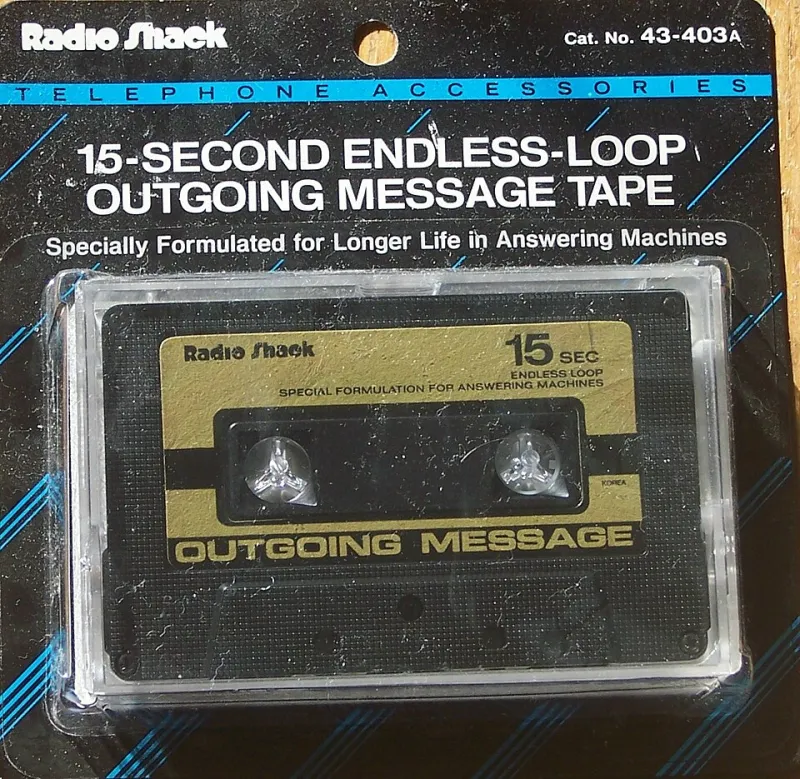
There was a specific kind of anxiety that came with a blinking red light on your answering machine. You'd walk in the door, drop your backpack or your keys, and there it was — that little pulse, steady and patient, telling you someone had something to say. You didn't know if it was good news, bad news, or something in between. You just knew it was real. Somebody picked up a phone, dialed your number, waited through your outgoing message, and then opened their mouth.
No backspace. No delete. No chance to overthink it.
That's the thing about voicemail in the '90s that we don't talk about enough: it was honest in a way that almost nothing in our current communication landscape manages to be.
The Unscripted Confession Machine
When someone left you a voicemail in 1994, they were working without a net. There was no draft folder, no "are you sure you want to send this?" prompt, no opportunity to paste in something smoother. They heard the beep, and then whatever came out of their mouth was the message. That rawness created something remarkable — a kind of accidental intimacy that we've been chasing ever since and mostly failing to recreate.
Think about the voicemails you remember. Not the logistics ones, not the "call me back" ones, but the real ones. The friend who called at midnight just to recite a lyric from a song you'd both been obsessed with that week. The person you were quietly falling for who left a two-minute ramble that started with "I was just thinking" and ended somewhere completely different. The family member who called to say something small but meant everything.
None of those people sat down and planned what they were going to say. The medium didn't allow for that. And because it didn't, what you got was closer to the truth than almost any other form of communication available at the time.
Replay Was Its Own Kind of Intimacy
Here's where voicemail gets genuinely fascinating from a cultural standpoint: you could save them. And people did. For months. Sometimes years.
There's no real modern equivalent to what it felt like to replay a voicemail from someone you cared about. You'd listen once to get the information, and then you'd listen again just to hear the way their voice sounded when they laughed in the middle of a sentence, or the slight pause before they said your name. You were essentially studying someone — their rhythms, their hesitations, the specific pitch they hit when they were nervous or excited — in a way that reading a text message could never offer.
Streaming culture has made us passive listeners, but replaying a saved voicemail in the '90s was an active, almost obsessive act. You were choosing, repeatedly, to return to that moment. To sit with it. There's a reason people talk about saving voicemails from loved ones who've passed — the voice carries something the words alone don't. We understood that instinctively back then, even if we didn't have the language for it.
Music Lived in Those Messages Too
One detail that tends to get lost in the nostalgia shuffle: people used voicemail to share music in the '90s. You'd hold the phone up to your stereo speaker, let ten seconds of a song play, and leave it on someone's machine. No link, no playlist share, no Spotify notification. Just the slightly muffled sound of a song you thought someone needed to hear, delivered personally.
It was a weird, lo-fi act of curation that felt enormous at the time. If someone called to play you part of a song, it meant they were thinking about you specifically while listening to it. That's not a small thing. That's someone essentially saying: this reminded me of you, and I wanted you to know that right now, while it was happening.
The '90s were full of those gestures — physical, deliberate, impossible to automate. Voicemail was just one of the formats they lived in.
The Permanence Problem We Didn't Know We Had
Of course, the other side of voicemail's intimacy was its stakes. You couldn't unsend a message. If you called someone at 11 PM after a rough night and said something you immediately regretted, that thing was sitting in their inbox until they decided what to do with it. The permanence cut both ways.
But even that tension was meaningful. It meant people thought — at least a little — before they called. Or when they didn't think and just dialed anyway, the result was something unfiltered enough to matter. The friction of the format was a feature, not a bug. It demanded a kind of emotional commitment from both the sender and the receiver that our current swipe-and-tap communication style almost never requires.
Today, if something feels too heavy to text, people just... don't send it. The ease of deletion has made us more careful and, in some ways, more guarded. In the '90s, if you needed to say something, you called. And if you were lucky, they saved it.
What the Blinking Light Actually Meant
Looking back, voicemail was doing something that we'd now call emotional labor without anyone naming it that way. It was the space where relationships got maintained between the in-person moments — where you'd check in, be weird, be vulnerable, be funny, be real. It was the connective tissue of friendships and romances that were conducted mostly offline and in person, but needed somewhere to breathe between those encounters.
The '90s didn't give us a lot of ways to be emotionally available at a distance. Long-distance phone calls were expensive, email was clunky and weirdly formal, and texting didn't exist yet for most people. Voicemail was the gap-filler that nobody designed for that purpose but which ended up serving it perfectly.
You pressed play and someone's actual voice came through. Not a text. Not an emoji. Not a reaction. A voice. With breath and pauses and personality baked into every syllable.
We called it leaving a message. What we were actually doing was leaving a piece of ourselves somewhere for someone else to find when they got home.
And they kept it. For longer than you probably knew.