Played Until It Broke: The Cassette Tapes We Loved to Pieces
At some point in the mid-'90s, you had a cassette that was on borrowed time. You knew it. The tape was starting to drag a little. The high end had gone slightly soft. If you listened carefully — and by that point you'd listened so many times you could hear every molecule of it — the vocals on the chorus had a faint warble that hadn't been there six months ago.
You kept playing it anyway. Obviously you kept playing it.
The Physics of Obsession
Cassette tape is a physical medium, and physical mediums respond to physical use. Every time the magnetic tape ran across the playback head, a microscopic amount of the oxide coating that held the audio information got worn away. Play a tape enough times and you were literally consuming it — turning the music back into raw material, a little bit at a time.
Most people knew this in a vague way without thinking about it too hard. What you felt in practice was something more immediate: the tape you'd played two hundred times sounded different from a fresh copy. Warmer in some frequencies, thinner in others. The way a pair of jeans looks different after two years of wear than the day you bought them. Broken in. Specifically yours.
That sonic degradation wasn't just tolerated — for a lot of '90s listeners, it became part of the record. The hiss, the occasional flutter, the way the bass got a little woolly toward the end of Side B. These were the fingerprints of your relationship with the music, pressed into the medium itself.
The Snap Heard 'Round the Bedroom
If you owned enough cassettes and played them hard enough, you eventually experienced the defining trauma of the format: the tape unspooling inside the shell and jamming in the deck. You'd press play and hear a horrible mechanical protest, and you'd know immediately what had happened.
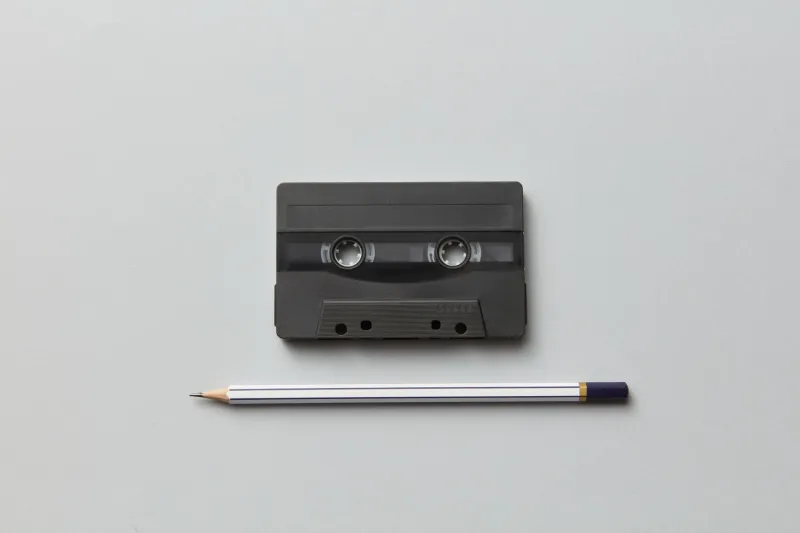
The next ten minutes involved a pencil. Every '90s kid who owned a cassette player knew this move — the careful, patient rewinding of loose tape back onto the spool using a pencil through the hub, coaxing it back into shape without creating a crease that would cause a dropout every time it passed the head. It was delicate work. It required focus. You did it without complaint because the alternative was losing the tape entirely.
The fact that you were willing to do this — the fact that you'd spend a quarter hour carefully rehabilitating a piece of magnetic ribbon rather than simply replace it — says everything about what those tapes meant. You weren't going to let this one go. Not this album. Not this one.
Some Albums Were Just Tape Killers
Certain records seemed almost designed to destroy cassettes through sheer force of replaying. The kind of album that hit you so hard on the first listen that you immediately rewound to Track 1 and went again. And again. And again.
In the '90s, those albums came from every direction. A debut record that blindsided you. A soundtrack that you'd been gifted and couldn't put down. A mixtape from someone you had feelings for that you played until the feelings became inseparable from the tape itself. The genre didn't matter. What mattered was the compulsion — that particular itch that only playing this specific thing could scratch.
The cassette absorbed all of it. Every rewind was a small act of damage. Every play was a vote cast in analog. By the time the tape was truly dying — the pitch drifting, the sound thinning out — you'd cast hundreds of those votes. The physical deterioration was a record of your devotion, worn into the oxide layer.
What Rewinding Actually Meant
Here's something worth sitting with: in the '90s, rewinding a cassette was a deliberate, physical act. You pressed the button, you waited — sometimes thirty seconds, sometimes a full minute for a longer tape — and you thought about what you were about to hear again. You anticipated it.
That waiting period was not nothing. It was anticipation, which is a form of engagement. You couldn't just tap a screen and instantly restart a track. You had to want it enough to wait for it. And when the rewind finished and you pressed play and the first few seconds of the song came through, the payoff was proportional to the effort.
Streaming is instant. That's a genuine advantage in almost every practical sense. But instant access doesn't create the same relationship with a piece of music that waiting for a rewind does. The friction was, again, part of the experience.
The Copy That Outlived the Original
Some tapes got so worn that the original became unlistenable before you were ready to stop listening. So you made a copy — dubbing from the original to a blank tape, accepting the generation loss, the slightly softer sound, the added hiss. You'd play the copy until that wore out too.
This process was completely normal and completely irrational, and it was one of the most devoted things a music fan could do. You were preserving access to something that mattered to you by actively copying and recopying it, accepting degradation at every stage, just to keep it playable. You were doing analog file preservation in your bedroom with a double-deck cassette player and a stack of TDK blanks.
No one does this with a streaming playlist. You can't. There's nothing to wear out, nothing to preserve, nothing to break. The music will always be there in exactly the same condition. And that's fine. That's genuinely fine.
But it means you'll never have the experience of playing a song so many times that you changed it. That you left a mark on it. That the version you loved best existed only in your specific copy, on your specific tape, worn down to exactly the right degree by exactly the right number of plays.
That tape is gone now, probably. But the version of the song it played? That one's still in there somewhere.