Earned and Unforgettable: Why the Hardest Songs to Find Were Always the Ones That Hit Deepest
There's a song you heard once. Maybe it leaked out of a car window in a parking lot, or drifted through the speakers of a record store you wandered into on a Saturday with nothing better to do. You caught maybe twelve seconds of it — a hook, a chord change, a voice — and then it was gone. You spent the next three weeks trying to track it down.
That process? That hunt? That's what we're talking about.
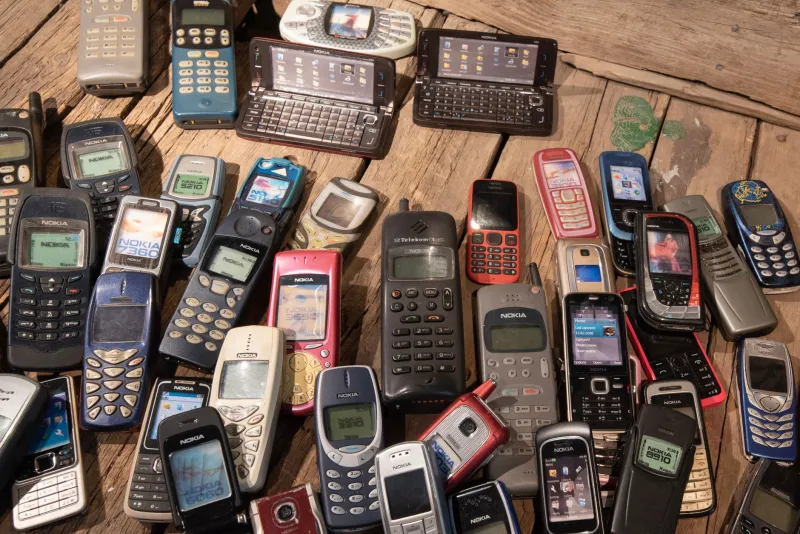
In the '90s, music didn't arrive. It had to be found. And that difference — between something delivered and something discovered — is at the heart of why so many songs from that decade still feel like they belong to us in a way that most modern releases just... don't.
The Friction Was the Feature
When people talk about '90s music discovery, they tend to focus on the limitations. Slow radio rotations. Record store clerks who judged your taste on sight. Cassette trades that took weeks to arrange. The fact that if you missed a music video, it was simply gone unless TRL decided to run it back.
But here's the thing nobody says out loud: the friction wasn't a bug. It was doing something important to how we processed and stored music emotionally.
Psychologists have a concept called effort justification — the idea that we assign greater value to things we've worked harder to obtain. It's why a meal you cooked yourself tastes better than takeout, even when the takeout is objectively more consistent. When you drove across town to a used CD shop, flipped through hundreds of cases, and finally found the album your friend had been hyping for a month, your brain had already decided it was going to be worth it before you ever pressed play.
Streaming doesn't give your brain time to do that math. The song is there before the thought is finished.
Radio as a Gatekeeper — and a Gift
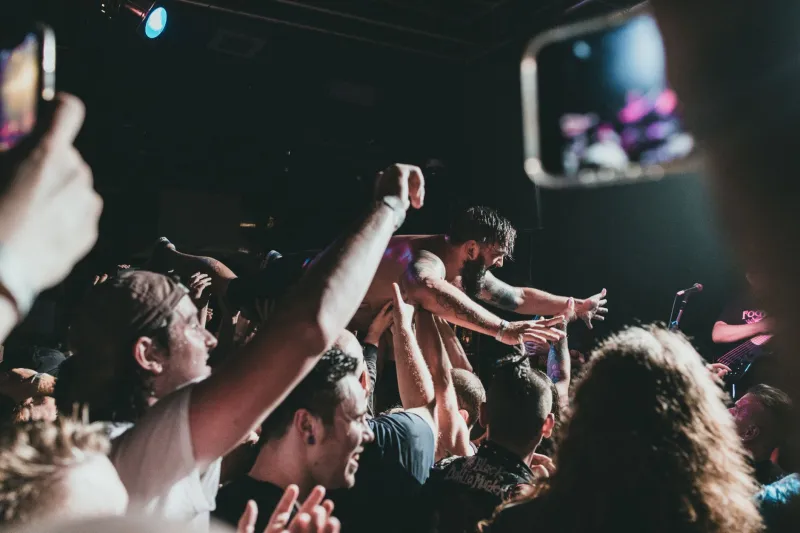
Hating on '90s radio is easy. Tight playlists, heavy rotation, the same twelve songs on a loop until you wanted to drive into a ditch. All fair. But radio also functioned as a shared cultural clock. Everyone heard the same things at roughly the same time, which meant that when something new broke through — when a song muscled its way onto the dial and stayed there — it felt like an event.
You didn't choose when to hear it. It chose you. And there's something about that passivity, that lack of control, that made the emotional response more raw. You couldn't prep for it. You couldn't skip it if you weren't in the mood. It just came through the speakers at 7:43 a.m. on a Tuesday and rearranged something inside you.
The algorithm, by contrast, is trying to predict what you already want. It's good at that. But it can't surprise you the way a late-night DJ with a weird taste in deep cuts could. Surprise is where the magic lives.
The Store as a Social Space
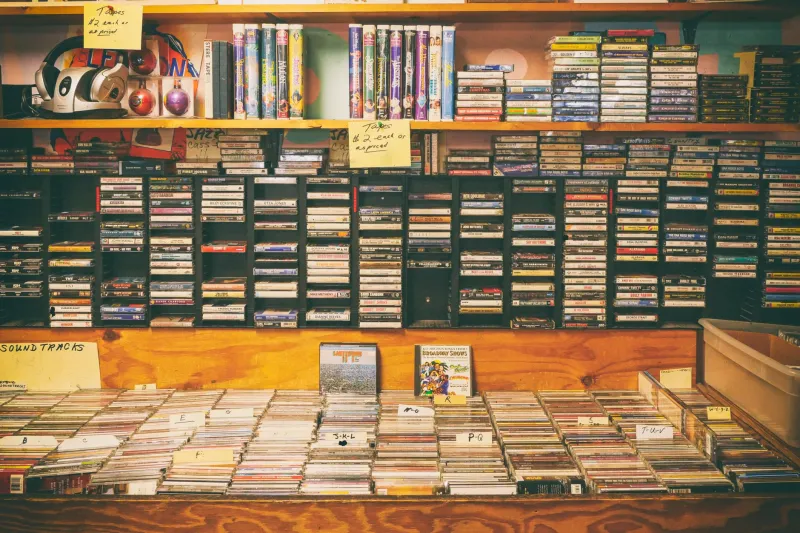
Record stores — and yes, that includes the music sections of places like Tower Records and even big-box stores with surprisingly good CD racks — were where taste was negotiated in real time. You'd see what someone else was buying. You'd notice an album cover that stopped you cold. A stranger might lean over and say, you like that? Have you heard this? and hand you something that changed your entire relationship with a genre.
That kind of serendipity doesn't happen on a homepage. Spotify's "You Might Also Like" is based on data. The guy at the register recommending something based on a vibe he got from the way you were dressed — that was based on something messier and more human.
Physical browsing created what you might call productive randomness. You went in looking for one thing and left with three things you hadn't planned on. The detours were the discovery.
Trading as Intimacy
Mixed tapes and burned CDs weren't just music delivery systems. They were acts of translation. When someone made you a tape, they were telling you something about how they saw you, what they thought you needed to hear, which parts of their own interior life they were willing to share. The music was the medium, but the message was personal.
Receiving one of those tapes meant sitting with it — because you had to. You couldn't cherry-pick tracks without a lot of rewinding. You listened in the order it was given to you, which meant you absorbed the whole thing, including the songs you might have skipped if you'd had the choice. Some of those forced listens became the most important songs you ever heard.
That's the paradox at the center of all of this: constraint created openness.
What Abundance Actually Costs
Nobody's seriously arguing that we should go back to limited access. Having thirty million songs available at any moment is, objectively, an extraordinary thing. But abundance comes with its own hidden tax.
When everything is available, nothing is precious. When you can find anything in seconds, the act of finding loses meaning. When a playlist auto-generates itself, you never have to develop taste — taste develops itself for you. And when music requires nothing from you, it tends to give back in proportion.
The songs that lived deepest in '90s listeners weren't necessarily the best songs ever recorded. They were the songs that cost something to find — time, effort, a bus ride, a conversation with someone you barely knew. The investment made the return feel enormous.
That's the serendipity tax. You paid it without knowing it, and the music was richer for the price.