Twelve Seconds of You: How the Ringtone Era Accidentally Invented Personal Branding
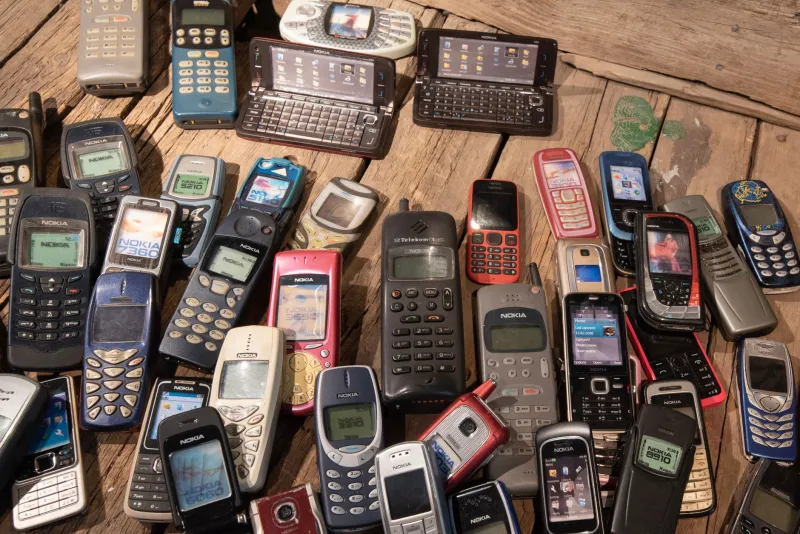
Picture a movie theater in 1999. The lights go down. Someone's Nokia 3210 goes off in the fourth row. It plays the first eight notes of the Seinfeld theme, and half the room either groans or suppresses a laugh. The other half is already mentally filing away that ringtone for future reference.
That moment — embarrassing, public, completely involuntary — was also a declaration. A tiny broadcast of taste and personality squeezed into a monophonic melody that sounded like it was being played on a toy xylophone. And somehow, it meant something.
The Impossible Choice
Here's the thing about early ringtones that's easy to forget now: you couldn't just have any song. The technology didn't work that way. Monophonic ringtones — the original format on most late-'90s phones — could only play one note at a time. That meant whatever track you chose had to survive being stripped down to a single melodic line, no harmony, no bass, no drums. Just the skeleton of a song rendered in tiny electronic bleeps.
The selection process was genuinely agonizing. You wanted something recognizable enough that people would know what it was, but not so obvious that it read as basic. You wanted it to represent you accurately, but also to sound halfway decent at that compression level. And you had about twelve to thirty seconds to make that statement before the call went to voicemail.
This is not a small decision when you're fourteen years old in a Midwestern middle school and everyone can hear your phone go off in homeroom.
The Polyphonic Upgrade and the Brief Golden Age
When polyphonic ringtones arrived around 2000 and 2001, the game changed. Suddenly phones could play multiple notes simultaneously, which meant actual chord structures, actual rhythm, something approaching the real song. It was still a MIDI approximation, still clearly synthetic, but it was recognizable in a way that monophonic tones often weren't.
The ringtone market exploded. Carriers started selling them as premium downloads — $1.99, $2.99, sometimes more — and teenagers spent real money on them. The wireless industry reportedly pulled in over $600 million from ringtone sales in the US at the peak of the market. For a few years, ringtones were genuinely one of the most profitable segments of the music business.
Artists noticed. Labels noticed. And then something interesting happened: the ringtone chart started diverging from the actual music chart. Songs that performed modestly on radio would absolutely dominate ringtone sales because they had a hook — a specific, repeatable four-bar phrase — that translated perfectly to the format. The ringtone era quietly started selecting for a certain kind of songwriting without anyone formally deciding that was the goal.
Crazy Frog and the Chaos It Unleashed
No honest conversation about ringtones survives without addressing Crazy Frog. The animated character — technically named Annoying Thing before being rebranded — was built around a sound effect that a Swedish teenager named Daniel Malmedahl had posted online in 1997. The sound was a human impression of a two-stroke engine. By 2005, a German company had turned it into a ringtone, then a full animated character, then a full single that went to number one in the UK and charted in the US.
Crazy Frog was not good. That wasn't the point. It was effective — as a ringtone, as a piece of audio branding, as a cultural irritant that nobody could ignore. The ringtone didn't need to be music you loved. It needed to be something that cut through ambient noise and immediately signaled something to everyone who heard it. Crazy Frog did that perfectly, even if what it signaled was mostly chaos.
What Crazy Frog accidentally demonstrated was that sonic branding — the idea that a specific audio signature could carry identity and recognition — worked on a mass consumer level. Companies and marketing agencies would spend the next decade trying to formalize that insight. The ringtone industry had already proven it.
Your Phone as Your Personality
What's worth sitting with is how genuinely expressive the ringtone choice felt at the time. In a world before social media profiles, before the curated playlist you could share with a link, before streaming gave everyone access to the same infinite library, the ringtone was one of the few sonic signals you could put into the world without intending to.
It was passive broadcast. You didn't choose to play your music for the people around you — the call just came in, the tone played, and suddenly everyone knew something about you. Whether you'd picked the opening riff of an Outkast track or the theme from The X-Files or something off the Backstreet Boys catalog, you'd made a statement. And you'd made it in public, where it couldn't be taken back.
That specific kind of accidental self-disclosure is something streaming has almost entirely eliminated. Your Spotify is private unless you choose to share it. Your Apple Music plays through headphones. Nobody in the coffee shop knows what you're listening to unless you tell them. The ringtone era had no such privacy. Your taste was audible whether you liked it or not.
What We Lost When We Went Silent
The shift to smartphones effectively ended the ringtone economy. When iPhones arrived and you could use any audio clip you wanted, the premium ringtone market collapsed almost immediately. Why pay $2.99 for a MIDI approximation of a song when you could clip the actual song?
But something else happened, too. Most people eventually just set their phones to vibrate. The era of the public ringtone — the involuntary broadcast, the accidental declaration of taste — quietly ended. We went from a world where phones announced themselves loudly and personally to one where they buzz silently in pockets, carrying enormous amounts of information about who we are and what we love, but sharing almost none of it with the room.
The ringtone was primitive, annoying, and occasionally embarrassing. It was also the first time most people ever used music as a daily identity marker in public space. That's not nothing. That's actually kind of a big deal.