Rewind, Burn, Download, Stream: How the '90s Changed the Way We Own Music Forever
Spotify has 100 million songs. You can access all of them right now, on your phone, for less than the cost of a single CD back in 1994. By any rational measure, this is an improvement. More music, less money, zero effort. Case closed.
Except it doesn't feel like an improvement, does it? Not entirely. There's something missing in the frictionlessness of it — something that the '90s, almost accidentally, understood about how music is supposed to work. The decade started with cassettes and ended with MP3s, and in between it staged a format war that transformed not just how we consumed music but what music meant to us in the first place.
The Sacred Ritual of the Mix Tape
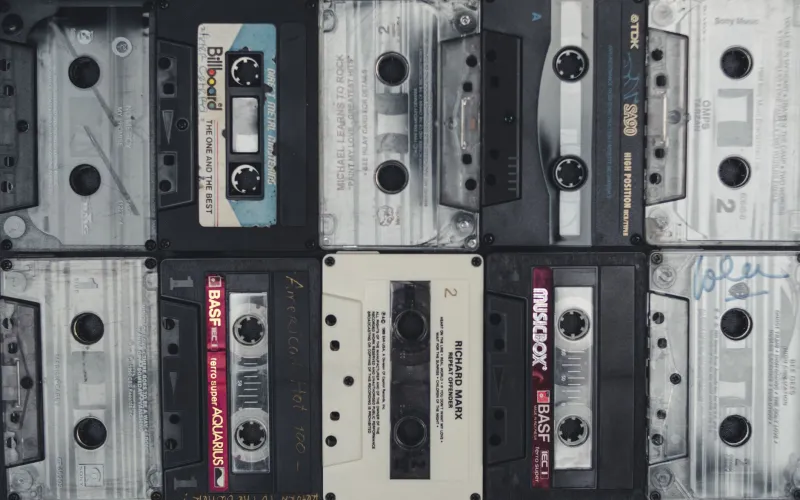
Let's start at the beginning, because the mix tape deserves more than a passing mention. Making one wasn't convenient. It required a dual-cassette deck or a record-to-tape setup, a stack of blank TDK or Maxell tapes, and a level of patience that today's culture has essentially abandoned. You had to plan the track order in advance. You had to account for the physical length of each song to avoid awkward cutoffs at the end of Side A. You had to sit there, in real time, and record the whole thing.
And that was the point. The effort was the message. Handing someone a mix tape was an act of disclosure — you were showing them your taste, your emotional state, your intentions, all wrapped in a plastic shell with a handwritten J-card. The recipient knew that every song choice was deliberate. There was no shuffle, no algorithm, no playlist generated by a mood keyword. There was just you, your record collection, and a decision about what to say without words.
For a generation of American teenagers, the mix tape was the primary love language. Whole relationships were conducted through 90-minute cassettes passed between lockers. Friendships deepened over tapes mailed across the country. Breakups were soundtracked by tapes you made for yourself, alone, at 11pm on a school night.
The CD Burned Bright
By the mid-'90s, the CD had already displaced the cassette in most record stores, and by the late part of the decade, the CD burner arrived in home computers and changed everything again. Suddenly you could make a mix with the audio quality of a commercial release. No tape hiss, no degradation after fifteen plays, no worrying about the tape getting eaten by your car stereo.
But the burned CD brought its own rituals. You still had to source the tracks — which meant owning the albums, or borrowing them from friends, or eventually finding them through the early file-sharing networks that were starting to crawl onto the scene. You still had to sequence the disc, still had to design a cover if you were the type (and a lot of people were the type), still had to hand it to someone as a physical object that they could hold.
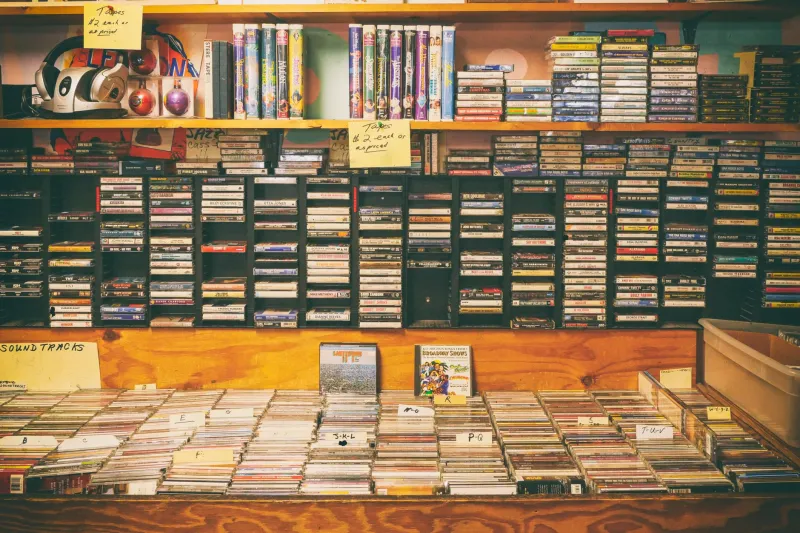
The burned CD era also coincided with the rise of music retail as an event. Going to Tower Records or Coconuts or your local indie shop on a Tuesday — new release day — was a legitimate social activity. You'd flip through the new arrivals, maybe hear something playing over the store speakers that you'd never encountered before, and walk out with something tangible. The album artwork mattered. The liner notes mattered. The physical act of ownership mattered.
Then Napster Blew the Whole Thing Up
Napster launched in 1999, right at the decade's edge, and it's impossible to overstate how completely it scrambled the existing logic of music consumption. Suddenly, any song you'd ever wanted — including songs that weren't in print, songs from albums you couldn't afford, songs from artists you'd only heard mentioned once — was available for free, in minutes, through your dial-up connection.
The music industry reacted with predictable fury. Metallica famously sued. The RIAA launched a years-long legal campaign that ultimately shut Napster down but failed to stop the underlying shift in consumer behavior. Once people understood that music could be free and instant, there was no going back to paying $17.99 for a CD you wanted two songs from.
But here's the thing that gets glossed over in the standard telling: Napster users in 1999 were still deeply engaged with music. They weren't passively consuming — they were hunting. You'd spend hours searching for a specific live recording, or a B-side that never made it onto an official release, or an album that had been out of print since 1987. The friction was different from a mix tape, but it was still there. You still had to want the music badly enough to go get it.
What Streaming Solved (And What It Quietly Removed)
The logical endpoint of all this — Spotify, Apple Music, Tidal, whatever you subscribe to — eliminated friction almost entirely. And in doing so, it changed what music is for. When everything is available all the time, the act of choosing becomes less meaningful. You don't have to commit to an album the way you did when you'd spent $15 on it. You don't have to sit with a record that confuses you on first listen, because there are ten thousand other records one tap away.
This isn't a moral argument against streaming. It's just an observation about what the '90s format ecosystem — for all its inconvenience — actually produced: people who had strong, specific, earned relationships with music. When you made a mix tape, you knew why every song was on it. When you bought a CD, you listened to the whole thing because you'd paid for the whole thing. When you spent forty-five minutes downloading a song on Napster, you listened to that song.
The physicality of '90s music formats forced a kind of intimacy that convenience has since dissolved. The songs didn't just live on your device — they lived in your hands, in your handwriting on the tape label, in the scratch on track four from the time you dropped the disc. They were yours in a way that a Spotify library, for all its size, can't quite replicate.
Maybe that's why '90s music still sounds so vivid to anyone who lived through it. The format and the feeling were inseparable. You didn't just hear those songs — you made something with them. And that, no algorithm has figured out how to stream.