Before the Wiki Existed, You Were the Archive: How '90s Fans Saved Everything by Hand
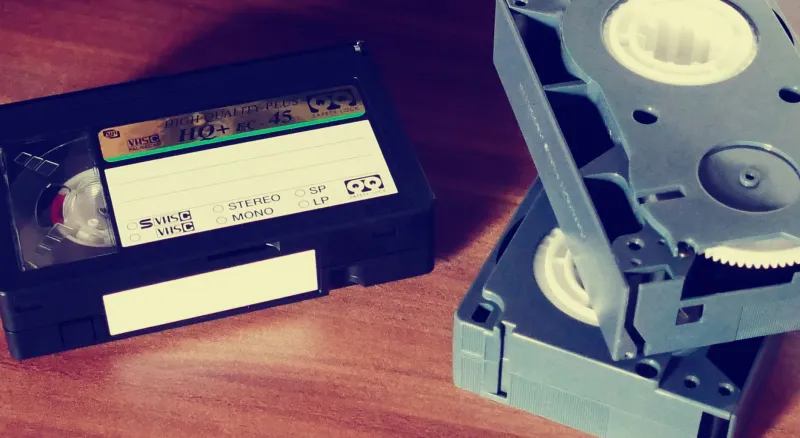
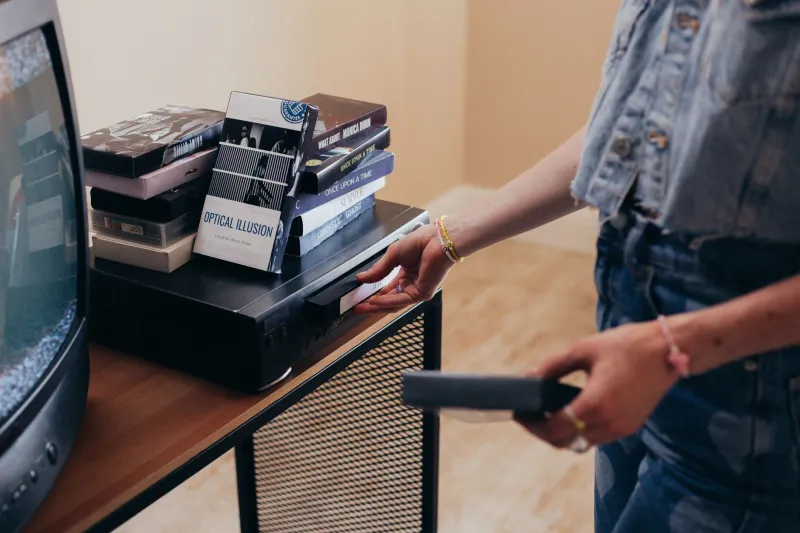
Somewhere in America right now, there's a Rubbermaid bin in someone's parents' basement containing a stack of VHS tapes labeled in blue ballpoint pen. TRL 10/14/98. Backstreet Boys + Brandy. DO NOT RECORD OVER. The tape is probably still playable. The person who made it probably hasn't thought about it in fifteen years. And it is, without exaggeration, a primary historical document.
Before YouTube made every performance permanently retrievable, before Wikipedia catalogued every B-side and tour date, before fan wikis assembled complete discographies with album art and production credits — there were teenagers with their fingers hovering over the record button, doing the work that no institution was going to do for them.
This is the story of how '90s fans built the first real music archives, one blank tape at a time.
The VHS as Time Capsule
If you wanted to preserve a music video in 1994, you had one realistic option: catch it on MTV or VH1, hit record at exactly the right moment, and hope the DJ didn't talk over the intro. This required attention, patience, and a certain tolerance for failure. You'd miss the first five seconds. The channel would cut away early. Your little brother would walk in front of the TV.
But over time, those tapes accumulated into something extraordinary. A dedicated fan might have dozens of them — labeled, sorted, cross-referenced in a way that would make a librarian nod with respect. Rare performances, regional video premieres, award show appearances that never got rebroadcast. Things that, if the tape eventually degraded, would simply be gone.
Some fans taped everything and sorted later. Others were surgically precise, recording only specific artists or genres. Either way, the behavior was the same: a conscious decision to treat pop culture as something worth saving, at a time when the culture itself barely seemed to notice it was happening.
The Burned CD Economy
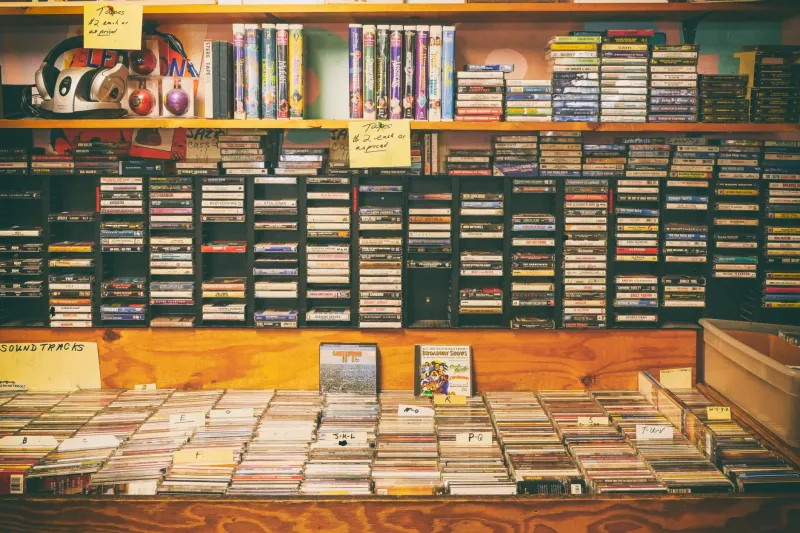
Once CD burners became accessible — which, depending on your household income, was somewhere between 1997 and 1999 — a parallel archival economy exploded. Burning CDs wasn't just about getting music for free. For serious fans, it was about completeness.
You'd burn an album for a friend, sure. But you'd also burn the import single with the three bonus tracks that never made it onto the US release. You'd burn a collection of every B-side from a band's entire catalog. You'd make a comp that sequenced obscure tracks in an order that told a story the official discography never quite told.
The J-card — that little folded insert that went into the plastic CD case — became its own art form. Fans typed up track listings, added their own liner notes, sometimes included hand-drawn art or printed images cut from magazines. These weren't just copies. They were curated objects, made with care, passed between people who understood what they were receiving.
The burned CD was a love language. And the person who made you one was essentially saying: I know you well enough to know what you're missing.
The Spiral Notebook Discography
Before any database existed to tell you a band's complete release history, fans built their own — in notebooks, on loose-leaf paper, sometimes in the margins of homework assignments that definitely never got turned in.
These handwritten discographies were obsessive and oddly beautiful. Release dates, catalog numbers, formats (vinyl, cassette, CD, promo only), notes about which pressings had different artwork, which tracks appeared on which compilations. Information gathered from magazine interviews, from the tiny print on record sleeves, from other fans at shows who happened to know something you didn't.
This was research in the pre-Google sense: slow, incomplete, constantly being revised. You'd find out you were wrong about something and have to cross it out and rewrite it. You'd leave blank spaces where you knew information existed but hadn't found it yet. The incompleteness was part of the project.
What those notebooks represented, in retrospect, was a genuine epistemological commitment to a subject. These fans weren't casually interested. They were building knowledge structures, the same way a historian builds knowledge structures — just with a Bic pen and a lot of free time after school.
Show Up, Document, Repeat
Live shows added another layer to the archival project. Before smartphones made concert recording trivial, fans brought camcorders, handheld tape recorders, or just relied on memory and wrote detailed setlists in the parking lot afterward while everything was still fresh.
Those setlists got traded. Fans would compare notes across cities — did they open with the same song in Cleveland that they opened with in Atlanta? Did they play the unreleased track they'd been testing in smaller markets? The aggregate of all that individual documentation built a touring history that no official record would ever capture.
Zines — those hand-assembled, photocopied publications that circulated through the mail and at record stores — were another crucial node in this network. A good music zine wasn't just opinion. It was reporting. Interviews conducted by fans, reviews of shows no major publication had covered, discographies compiled through months of correspondence with other collectors. Reading a zine meant accessing knowledge that existed nowhere else.
What They Were Actually Building
It's easy to look back at all of this and see it as quaint — analog workarounds for problems that technology eventually solved. But that framing misses what was actually happening.
These fans weren't waiting for someone to build them better tools. They were doing the work themselves, with whatever they had, because the work mattered to them. The VHS collection, the burned CDs, the handwritten discographies — these weren't just hobbies. They were the infrastructure of a cultural memory that would otherwise have disappeared.
When YouTube launched in 2005 and people started uploading old performances, where did a lot of that content come from? Digitized VHS tapes. Personal collections that fans had maintained for a decade. The analog archive feeding the digital one.
Every fan wiki, every streaming playlist, every carefully maintained artist database owes something to the teenagers who sat in front of their televisions with their fingers on the record button, doing preservation work that nobody asked them to do and nobody was going to pay them for.
They just knew it mattered. And they were right.