Still Pressing Play: The Die-Hard Cassette Collectors Who Never Moved On (And Don't Want To)
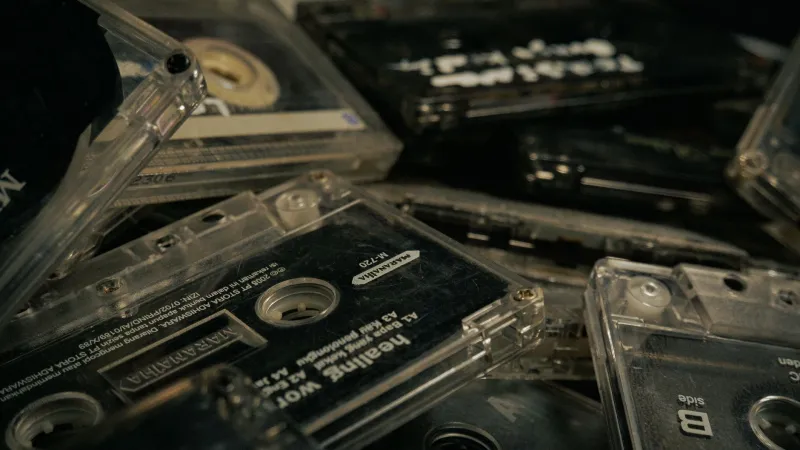
In a storage unit in suburban Columbus, Ohio, there are roughly 2,400 cassette tapes organized by year, genre, and — in one specific corner — emotional occasion. The owner, a fifty-three-year-old middle school art teacher, can tell you exactly which tape he made after his first serious breakup in 1991, what order the songs were in, and approximately how many times he had to rewind side B because the auto-reverse on his Walkman was going.
He is not unusual. He is, in fact, pretty typical of a specific and deeply committed subculture that has existed quietly alongside every format revolution of the last thirty years — the cassette collector. Not the ironic kind who buys reissues at Urban Outfitters. The real kind, with the shoebox archives and the working decks and the strong opinions about tape formulation.
Everybody talked about vinyl's comeback. Nobody really talked about the people who never put the tapes down in the first place.
The Format That Wasn't Supposed to Survive
Cassettes were always meant to be disposable. That was actually part of their design philosophy — cheap, portable, replaceable. The music industry treated them accordingly. When CDs arrived in the mid-'80s and exploded through the '90s, labels couldn't wait to kill the format. By the early 2000s, major retailers were quietly clearing out their tape sections. By the time iTunes launched, the cassette was officially a punchline.
Except it wasn't gone. It was just underground.
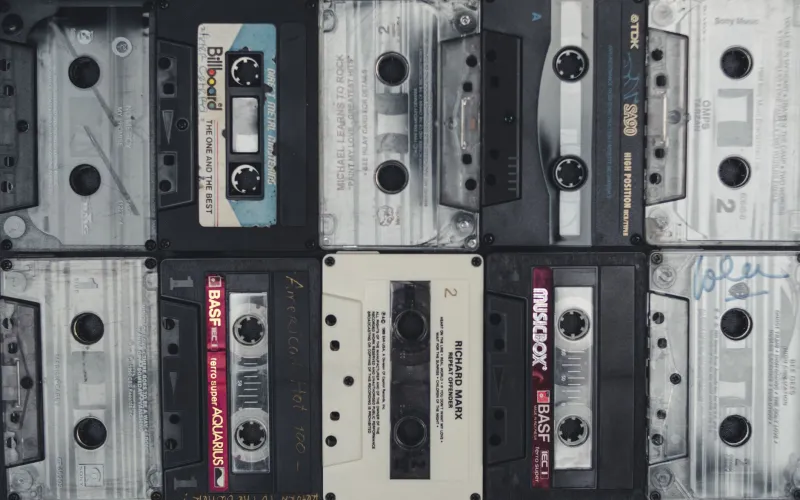
A small, stubborn community of collectors kept buying tapes at garage sales, thrift stores, and estate sales throughout the aughts and 2010s. They kept their decks running — or learned to repair them when they broke. They traded knowledge about which tape brands held up over time (TDK SA and Maxell XLII come up constantly in collector circles) and which players were worth hunting down (the Nakamichi Dragon has an almost mythological status).
These weren't people in denial about technological progress. They knew perfectly well that streaming existed. They just didn't think streaming was a replacement for what a cassette actually did.
The Mixtape as Personal Document
Here's the thing about a mixtape that no playlist has ever managed to replicate: it took real time to make. You had to sit there, in real time, and record each song. You had to think about transitions, about the energy arc of the whole thing, about whether forty-five minutes was enough or too much for each side. You had to write the track listing by hand on that tiny little insert card, usually in handwriting that got smaller and more cramped as you ran out of space.
The effort was the message. When someone handed you a mixtape in 1994, you understood immediately that they had spent an actual evening on it. That they had thought about you specifically while choosing every song. The physical object carried that investment in a way that a Spotify playlist link, shared in three seconds via text, simply cannot.
Collectors talk about this constantly. The tapes they keep aren't always the ones with the best audio quality or the most valuable recordings. They're the ones somebody made for them. A tape labeled For the Drive to Colorado in someone's handwriting. A tape called When You're Sad, Vol. 2 that a college roommate left on a pillow. These objects are irreplaceable in a way that has nothing to do with the music on them and everything to do with the human act of making them.
The Sound Question
Ask a serious collector about audio quality and you'll get a more nuanced answer than you might expect. They're not claiming tape sounds better than a lossless digital file. Most of them will freely admit that it doesn't, at least not in any technically measurable way.
What they'll argue is that it sounds different in ways that matter to them. Tape has a specific warmth — a slight compression, a gentle high-frequency roll-off, a noise floor that analog enthusiasts describe as musical rather than intrusive. Cassettes recorded at home in the '90s, particularly those made on quality chrome or metal-formulation tape, have a particular character that's tied to the gear of that era, the rooms those recordings happened in, the specific imperfections of analog signal chain.
Some collectors specifically seek out home recordings — local bands that pressed fifty copies of a demo tape in 1993 and sold them at shows, original mixtapes with handwritten labels, regional artists who never made it out of their state. These tapes exist nowhere else. There's no digital version. If the tape degrades, the recording is gone. That fragility is part of what makes them precious.
Why Vinyl Got the Comeback and Tape Got Overlooked
Vinyl's resurgence is one of the genuinely surprising cultural stories of the last two decades. Record Store Day became a national event. Major labels started pressing new releases on wax again. The format went from nostalgia item to legitimate market segment.
Cassette collectors have a complicated relationship with this development. On one hand, tapes have seen a modest resurgence of their own — independent artists and small labels have been releasing music on cassette since the early 2010s, and the numbers, while tiny compared to vinyl, are real. On the other hand, cassettes never got the mainstream rehabilitation that vinyl did, and collectors mostly seem fine with that.
The consensus view in collector communities is roughly this: vinyl's comeback was driven by audiophiles and by a certain kind of conspicuous consumption — the $400 turntable in the living room as a lifestyle statement. Cassettes don't offer that. They're not impressive-looking. They're not a status symbol. They're small and plasticky and associated with dollar bins and thrift store finds. That keeps the community smaller, more insular, and frankly more interesting.
The people who collect cassettes aren't doing it to be seen. They're doing it because the format does something for them that nothing else does.
The Community That Built Itself Quietly
Online forums, subreddits, Facebook groups, and Discord servers have given cassette collectors a connective tissue they didn't have in the '90s. Tapes get traded across state lines. Collectors share repair tutorials for aging decks. Someone in Portland will mail a rare 1992 demo tape to someone in Atlanta because they tracked down a duplicate copy and figured the other collector would appreciate it more.
There's a generosity to the community that feels connected to the format itself — the same impulse that made someone sit down and record a mixtape for a friend is still operating, just distributed across a wider geography.
Back in that Columbus storage unit, the art teacher pulls out a tape with a cracked case, carefully repaired with clear tape and a steady hand. He doesn't play it very often anymore — the recording is getting fragile, and he doesn't want to wear it out. Mostly he just keeps it. Proof that someone, once, thought he was worth an evening and a ninety-minute TDK.
You can't put that on a playlist.